LLC, Corporation, or Partnership?
Should I form an LLC, a Corporation, or a Partnership?
Search online and you'll find plenty of confident answers:
“Just open an LLC.”
“Choose a Delaware C Corporation if you're serious.”
“An S Corporation is better for taxes.”
But there's a problem.
None of those answers tells us anything about your business.
The right entity isn't necessarily the most popular one. It should fit your ownership, operations, risk, tax situation, funding plans, and long-term goals.
So before asking “LLC or Corporation?”, ask:
What kind of business am I actually building?
Legal Entity and Tax Classification Are Different
Before comparing your options, there's one important concept to understand:
Your legal entity and federal tax classification aren't always the same thing.
An LLC, for example, is a legal structure created under state law. For federal income tax purposes, however, its treatment can depend on the number of owners and elections made by the business.
A single-member domestic LLC is generally treated as a disregarded entity unless it elects corporate treatment. A domestic LLC with two or more members is generally treated as a partnership unless it elects corporate treatment.
So saying “I have an LLC” doesn't tell the entire tax story.
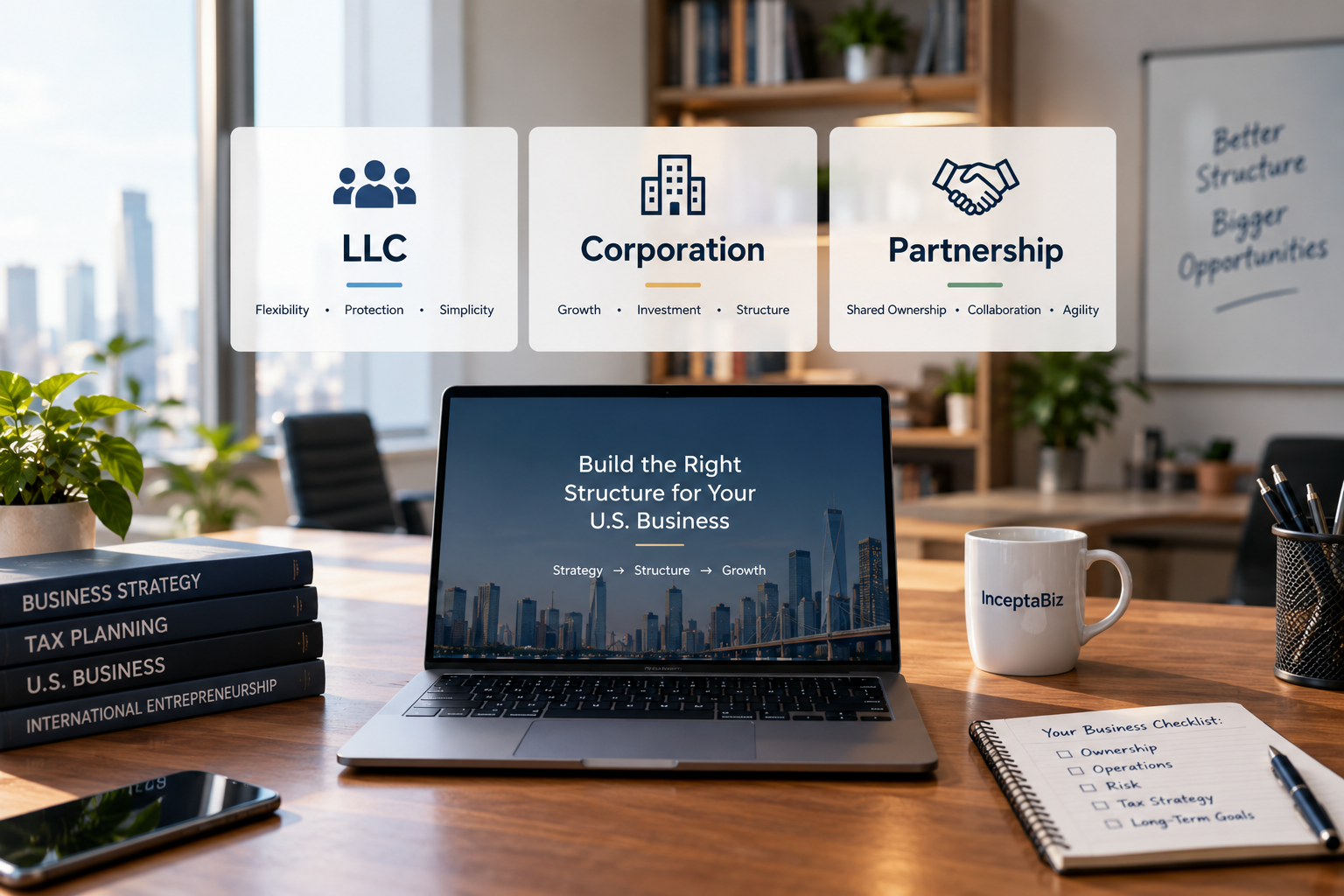
Understanding Your Main Options
Sole Proprietorship
A business owned and operated by one individual without creating a separate legal entity. It's simple, but the owner and business aren't legally separated in the same way they generally are with an LLC or corporation.
Partnership
A business owned by two or more people. Beyond choosing the entity, partners need to consider ownership percentages, profit allocation, decision-making authority, and what happens if someone leaves or wants to sell their interest.
Limited Liability Company — LLC
An LLC is a state-law business structure that can have one or multiple members. Entrepreneurs often consider LLCs because they can combine liability protection with structural flexibility. Their federal tax treatment can vary based on ownership and elections.
Corporation
A corporation is a separate legal entity owned by shareholders. Corporations can be particularly relevant when a business expects to raise outside capital, issue shares, add shareholders, or build a more formal ownership structure.
Different Businesses Need Different Structures
Consider a solo consultant working with international clients. She's the only owner, doesn't need investors, and values simplicity and separation between personal and business activities. An LLC may be worth evaluating.
Now consider two founders starting an agency. They need to determine ownership, profit sharing, decision-making authority, and what happens if one partner leaves.
Their ownership agreement becomes just as important as their entity. Now imagine a technology startup planning to raise capital and issue equity. A corporation may become more relevant because corporations can issue stock and provide a structured framework for equity ownership.
Finally, consider a growing e-commerce business managing inventory, suppliers, contractors, multiple markets, and increasing operational risk. Liability, banking, bookkeeping, tax compliance, and future growth all become part of the entity conversation.
Same question. Very different businesses. Potentially very different answers.
Five Questions to Ask Before Choosing
1. Who will own the business?
One founder, multiple partners, or future investors?
2. What does the business do?
A consultant, e-commerce company, real estate business, and technology startup can have very different needs.
3. What level of liability protection do you need?
Your operational and contractual risks should be considered.
4. Where do you want the business to be in five years?
Will you hire employees, add partners, raise capital, issue equity, expand internationally, or eventually sell the company?
5. What are the tax implications?
Your structure can affect filing requirements and how income is treated.
Don't Choose an Entity Because Someone Else Did
This is one of the most common mistakes founders make. Your friend has an LLC. Your competitor has a Delaware Corporation. An influencer recommends Wyoming. Someone on YouTube says everyone should elect S Corporation taxation. None of those examples tells you what's appropriate for your business.
Your company has its own owners, customers, revenue model, risks, funding plans, tax considerations, and growth strategy. A better framework is:
Business Goals → Ownership → Risk → Tax → Structure
The entity should be the result of the conversation—not the starting point.
Jimmy's Insight
“The right entity isn't the one with the best reputation online. It's the one that makes sense for the business you're actually building—and the business you expect to become.”
— Jimmy Flores, Senior Tax & Business Strategist
Choose the Business Before the Entity
There is no single structure that's right for every entrepreneur. An LLC may fit one business. A partnership structure may make sense for another. A corporation may better support a company planning to raise outside investment.
The important thing is to start with your business, not the entity everyone else is talking about. At InceptaBiz, we help international entrepreneurs understand their U.S. business structure options and navigate company formation, banking, bookkeeping, tax compliance, and ongoing business support.
Before you choose an entity, understand the business you're building.
That's where the right decision begins.