A Guide for International Entrepreneurs
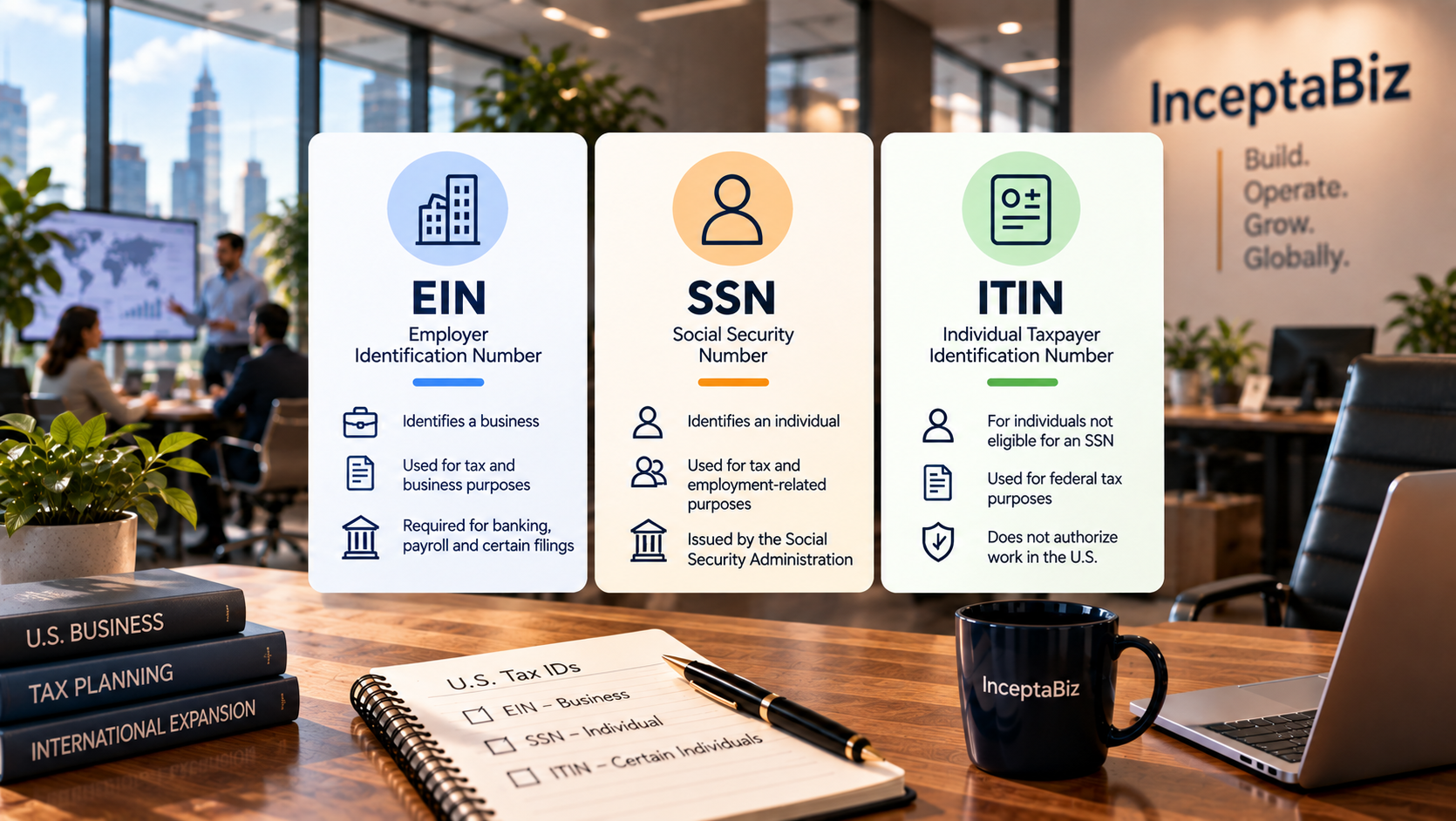
You've formed your U.S. company. You have your formation documents. You've received your EIN. Now comes one of the first practical questions:
“How do I open my first U.S. business bank account?”
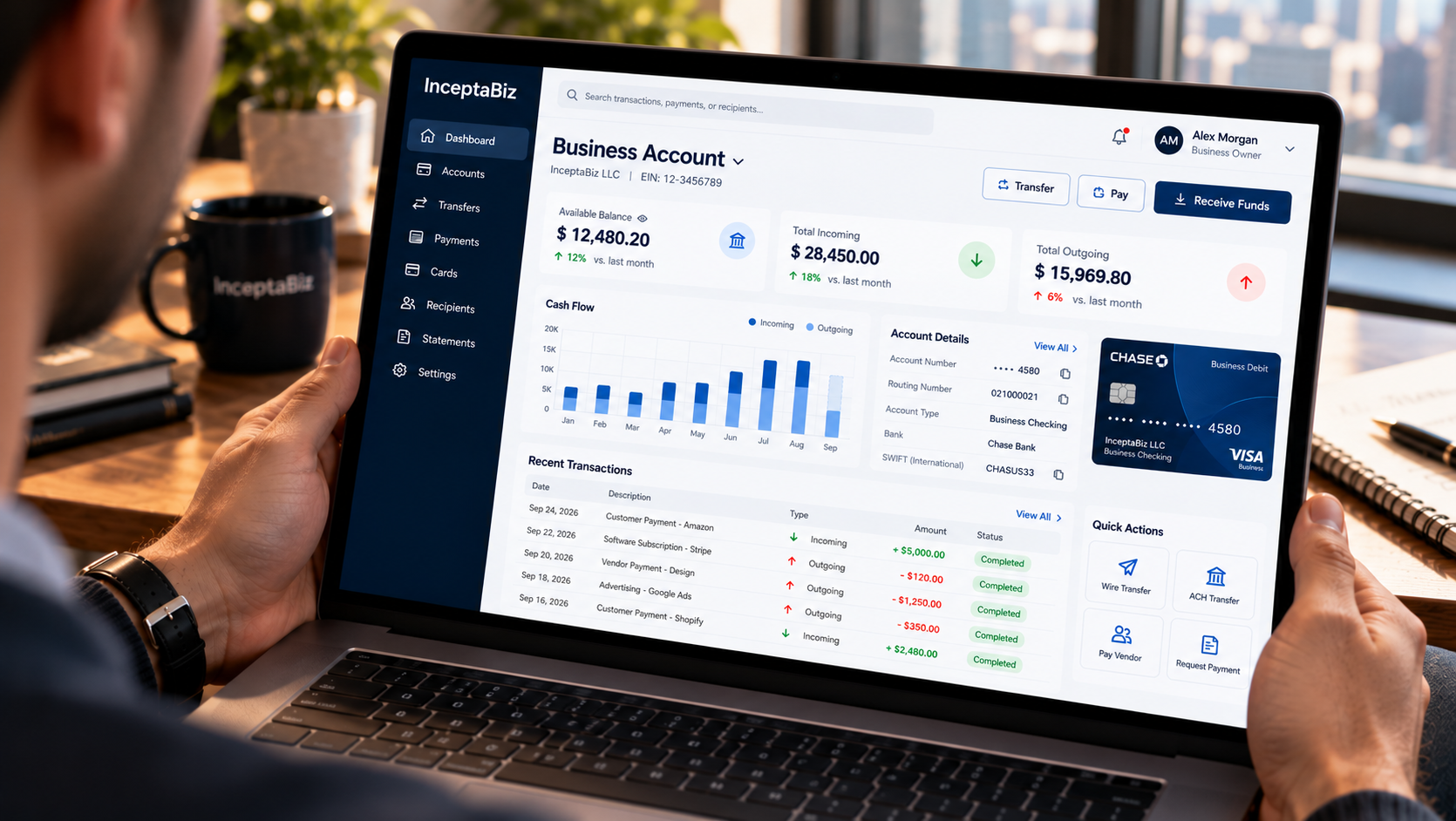
For international entrepreneurs, opening a business account is about much more than finding somewhere to keep money. Your company needs a system to receive customer payments, pay vendors and contractors, manage expenses, maintain financial records, and eventually support accounting and tax compliance.
Think about it this way:
Company formation creates the business. A business bank account creates a place to operate the business financially.
Why Does a Business Bank Account Matter?
A business bank account becomes part of your company's financial operating system. It can help you:
Receive customer payments
Pay business expenses
Pay vendors and contractors
Connect payment processors
Track transactions
Separate business and personal funds
Maintain cleaner bookkeeping records
That last point is particularly important.
Bank transactions often become an important source of information for bookkeeping and financial reporting. Keeping business activity in a dedicated account creates a much cleaner financial trail.
Business Account vs. Personal Account
One of the most common mistakes new founders make is mixing business and personal money. Imagine your company receives a $5,000 payment. It goes into your personal account. You use part of it for software. Another part for advertising. Then you pay a contractor. Later, you use the same account for groceries and other personal expenses.
Six months later, someone has to determine which transactions belonged to the business. That's when things get complicated.
A much cleaner principle is:
Business money should flow through the business account.
Keeping business and personal activity separate makes bookkeeping, financial reporting, and tax preparation easier to manage.
What Do You Need to Open a U.S. Business Bank Account?
This is often where international founders become concerned. You may have a U.S. company but live outside the United States. Will a financial institution still open an account?
It depends on the institution and your circumstances.
Banks and other financial institutions have their own eligibility criteria, onboarding processes, and documentation requirements.
Commonly requested information can include:
EIN
Company formation documents
Ownership information or operating agreement
Government-issued identification
Business licenses, when applicable
Information about your company's activities
Individual institutions may request additional documentation. Instead of asking:
“What's the minimum paperwork I need?”
Ask:
“What information will help the institution clearly understand my company and how it operates?”
Why Does the Bank Ask So Many Questions?
International founders are sometimes surprised by the amount of information requested during account opening. A financial institution may ask:
What does your company do?
Who owns it?
Where are you located?
Where are your customers?
Where will money come from?
Which countries will you send money to?
How much transaction activity do you expect?
These questions aren't necessarily a sign that there's a problem. Financial institutions have customer identification and due-diligence responsibilities, including requirements that can involve identifying customers and beneficial owners of legal entities. A good principle during onboarding is:
Be clear. Be accurate. Be consistent.
The Challenge for Non-Resident Founders
A non-resident entrepreneur may have:
A U.S. company
A U.S. EIN
A foreign residential address
International customers
International suppliers
No U.S. SSN
Operations across multiple countries
Different institutions may evaluate that profile differently. They can have different eligibility requirements, documentation standards, onboarding procedures, and risk policies. That's why banking shouldn't be treated as an afterthought. It should be part of your overall U.S. business strategy.
Don't Choose a Bank Only Because You Recognize the Name
The biggest or most famous bank isn't automatically the best option for every business.
Before choosing your banking solution, consider five areas.
1. Does It Support Your Business Structure?
Make sure the institution works with your entity type and ownership structure.
2. Does It Support International Founders?
If you're a non-resident, review its requirements for international applicants.
3. Does It Support Your Payment Flows?
Think about how money will actually move through your business: ACH, wires, card payments, payment processors, international transfers, and other payment methods.
4. What Will It Cost?
Look beyond monthly fees. Consider minimum balances, wire fees, transaction fees, ACH-related charges, and foreign exchange costs.
5. Can It Grow With You?
The account that works for ten transactions a month may not necessarily be the best solution when you're processing hundreds of transactions, paying contractors internationally, or operating through multiple payment channels.
Your banking strategy should have room to evolve.
Connect Banking to Bookkeeping
Opening the account is only the first step. Your banking should eventually connect to the rest of your financial system:
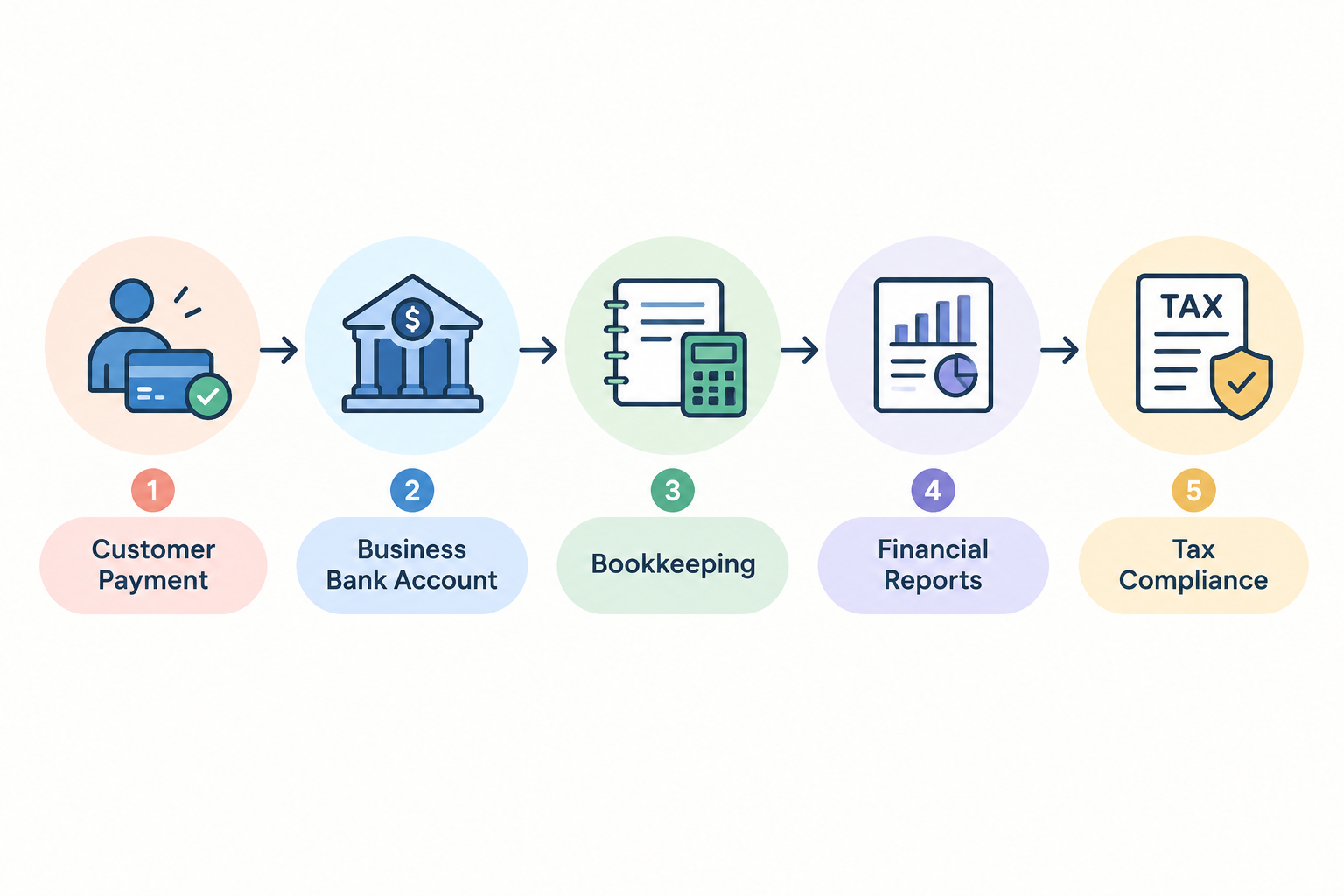
When these systems work together, it becomes much easier to understand what's actually happening inside the business. Good records help businesses track income and expenses, monitor performance, prepare financial statements, and support tax preparation.
Banking and bookkeeping shouldn't be treated as completely separate projects.
Common Business Banking Mistakes
“Once I have an EIN, every bank must open an account for me.”
Not necessarily. An EIN is an important business identifier, but financial institutions still have their own onboarding and risk procedures.
“I'll use my personal account until the company gets bigger.”
Mixing personal and business transactions can create unnecessary bookkeeping and financial-record problems.
“The cheapest account is automatically the best.”
Fees matter, but so do payment capabilities, international functionality, transaction limits, accessibility, and scalability.
“If the bank asks many questions, something must be wrong.”
Not necessarily. Customer identification and due-diligence procedures are a normal part of financial services.
Jimmy's Insight
“Your first bank account is not just where your money sits. It is where your business starts creating a financial history.”
— Jimmy Flores, Senior Tax & Business Strategist
The objective isn't simply to get an account approved. It's to build a banking setup that supports:
Payments → Expenses → Bookkeeping → Reporting → Tax Compliance → Growth
Before You Apply: Build a Business Banking Profile
Before applying for your first account, prepare answers to these questions:
1. What does the company do?
2. Who owns the company?
3. Where does it operate from?
4. Who are its customers?
5. Where will money come from?
6. Where will money go?
7. What payment methods will you use?
8. What transaction volume do you expect?
Then organize your formation documents, EIN information, ownership records, and identification. This preparation can make the onboarding process much more structured.
Build a Banking System, Not Just a Bank Account
Don't simply ask:
“Which bank should I use?”
Ask:
“What does my business need from its banking system today—and what will it need as it grows?”
Your first business bank account should support the way your company receives, holds, tracks, and sends money.
At InceptaBiz, we help international entrepreneurs understand how company formation, EIN, banking, payments, bookkeeping, and tax compliance fit together—so they're building a financial foundation they can actually operate on.
Opening the account is step one. Building the financial system around it is what matters next.