Opening a U.S. business bank account is an important milestone. For many entrepreneurs, the next step is using a fintech platform to receive customer payments, transfer money, manage expenses, and handle everyday transactions. And for a while, that may be exactly what the business needs.
But what happens when your company starts growing?
You begin receiving larger payments, working with more suppliers, hiring contractors, and expanding into new markets. Suddenly, the financial tools that once made everything simple may no longer support every part of your operation.
That raises an important question:
Is your financial infrastructure growing alongside your business?
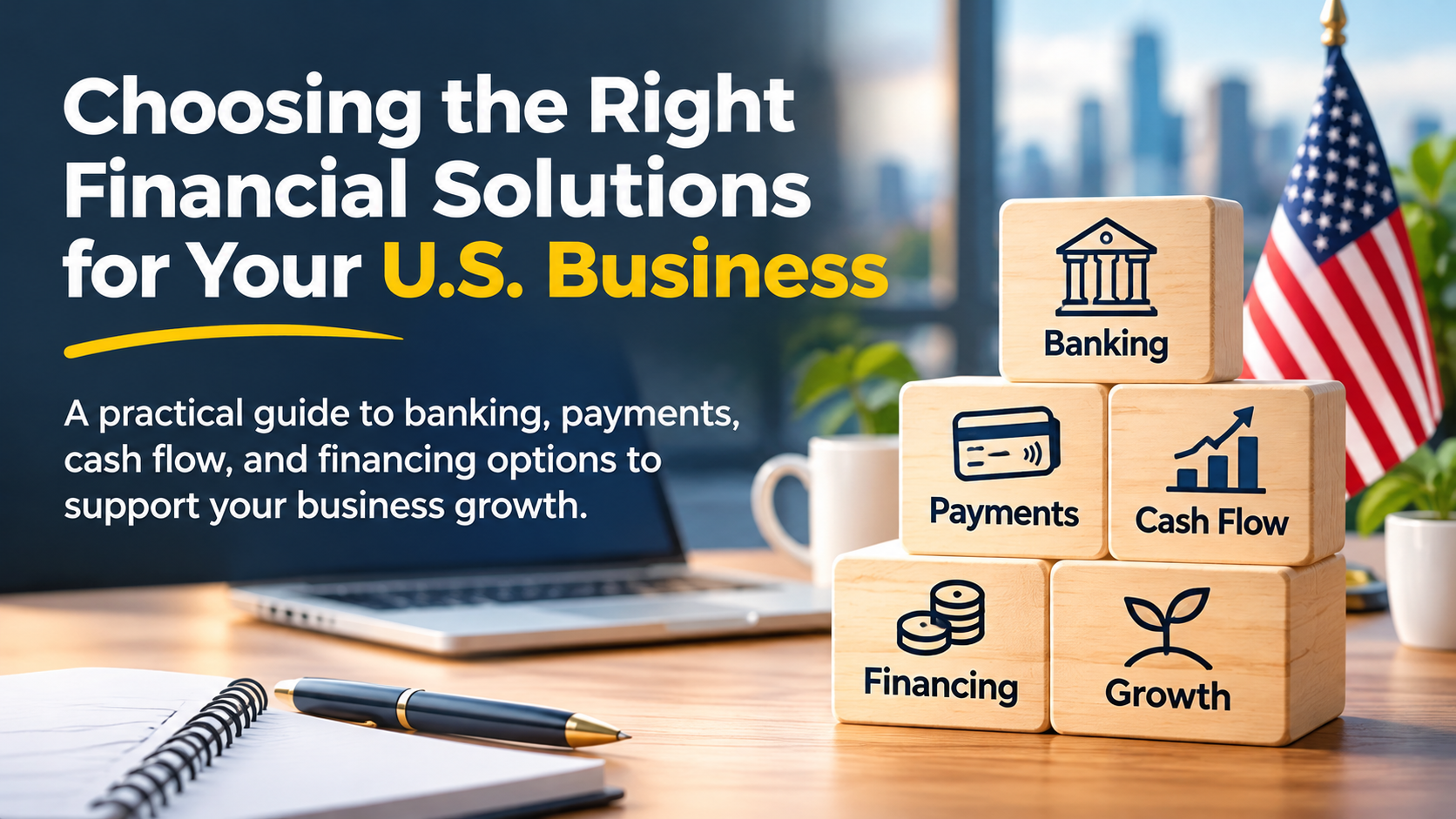
The answer isn't necessarily to abandon fintech or open more accounts. It's to understand which financial services your company actually needs—and how those services should work together.
What Does Growing Beyond Fintech Actually Mean?
Fintech stands for financial technology. It describes technology-enabled financial products and services that help individuals and businesses manage money.
For U.S. business owners, fintech solutions may include:
Digital business accounts
Online payment processing
International money transfers
Digital invoicing
Expense management platforms
Online lending solutions
Accounting and financial integrations
These services can make financial operations more accessible and efficient.
However, fintech platforms don't necessarily provide every service offered by a traditional bank. Some fintech companies provide technology and customer-facing platforms while partnering with regulated financial institutions for underlying banking services.
Others operate under different regulatory structures. Growing beyond fintech doesn't mean replacing technology with traditional banking. It means creating a financial system that combines suitable banking relationships, payment services, financial tools, and operational processes.
The goal is not to use more products. The goal is to build a financial infrastructure that supports the business you're becoming.
Five Financial Needs That May Emerge as Your Business Grows
As your company develops, its financial requirements may become more complex.
Here are five areas worth evaluating.
1. More Comprehensive Business Banking
A digital business account may work well when your company has relatively simple financial operations. But as transaction volumes increase, additional banking capabilities may become useful. Depending on the institution and your company's eligibility, these may include:
Business checking and savings accounts
Multiple accounts for different purposes
Cash management services
Domestic and international transfers
Dedicated business banking support
Additional banking products
For example, a growing company might want separate accounts for operating expenses, tax reserves, and other financial purposes.
This can make it easier to organize cash and monitor obligations. A traditional banking relationship may also provide opportunities to discuss financial needs with a banking representative.
However, opening a bank account does not automatically qualify your company for financing or additional services. Business banking should support your operations—not simply provide another place to hold money.
2. Payment Processing and Merchant Services
Imagine you started an online business accepting payments through one provider. Initially, the arrangement worked well. But now your company serves more customers, processes recurring payments, and sells through different channels.
You may need:
Credit and debit card processing
Multiple payment methods
Online checkout integrations
Recurring billing
Point-of-sale solutions
Refund and chargeback management
Payment reconciliation and reporting
These capabilities are commonly associated with merchant services. When evaluating payment providers, don't focus exclusively on transaction fees. Consider settlement times, payment limits, supported countries, chargeback procedures, integration capabilities, and total operating costs. The right payment system should make it easier to receive, track, and reconcile customer payments as your business grows.
3. Business Credit and Financing
Growth sometimes requires capital before additional revenue arrives. Your company may need funding to purchase equipment, increase inventory, hire employees, expand marketing, or manage temporary cash flow gaps. Depending on eligibility, businesses may consider several financing options.
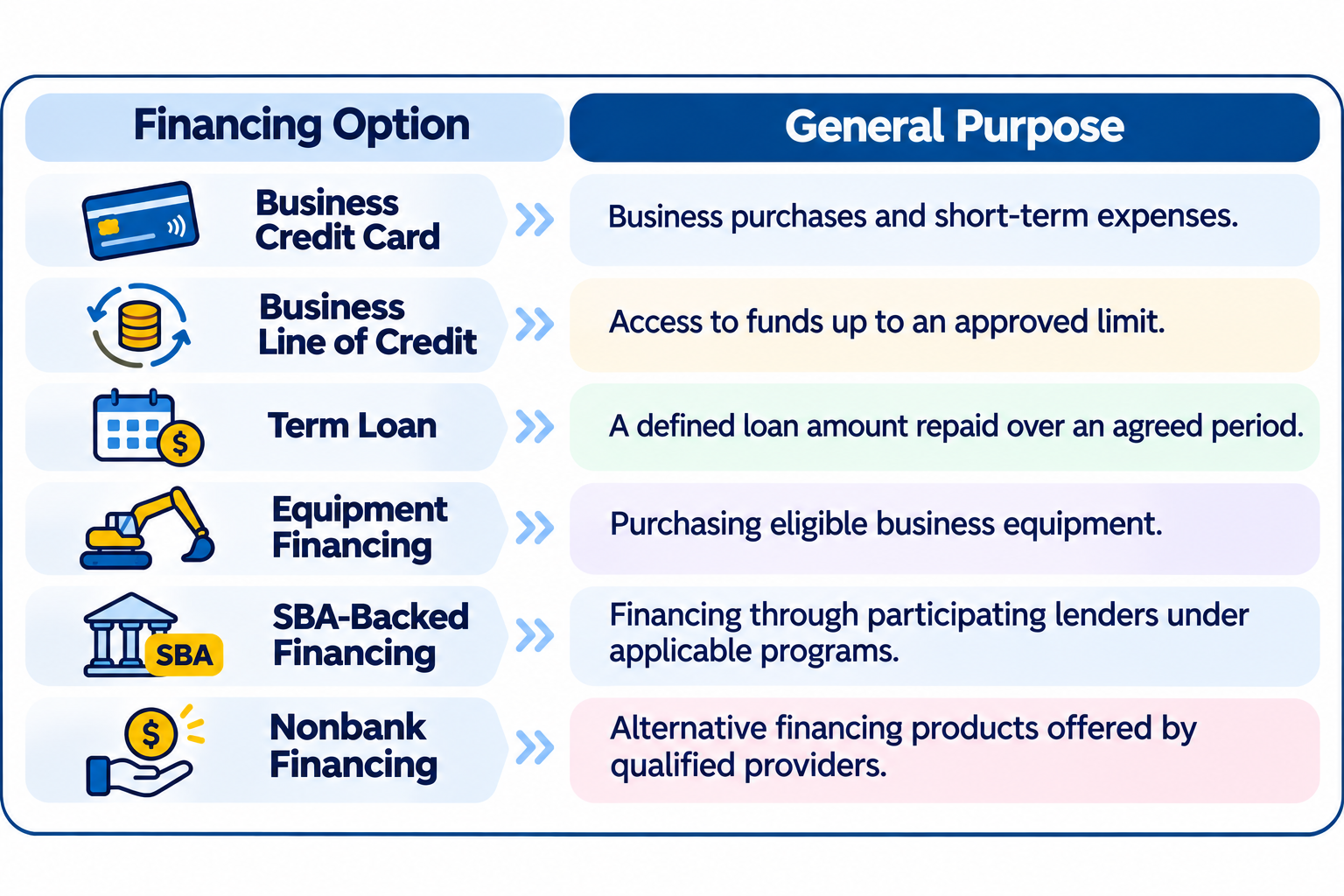
Each financing option has different costs, repayment terms, eligibility requirements, and risks. Before accepting financing, understand the interest rate, fees, repayment schedule, collateral requirements, and any personal guarantees.
For international entrepreneurs, access to financing may depend on factors such as ownership, residency, credit history, business operations, and lender-specific requirements. A U.S. company doesn't automatically qualify for U.S. business credit or financing. And a fast approval process doesn't necessarily mean a financing product is suitable for your business.
4. Payroll and Financial Operations
As your business begins working with employees, contractors, suppliers, and other service providers, managing payments becomes more complicated.
You may need systems for:
Payroll processing
Contractor payments
Accounts payable
Accounts receivable
Expense management
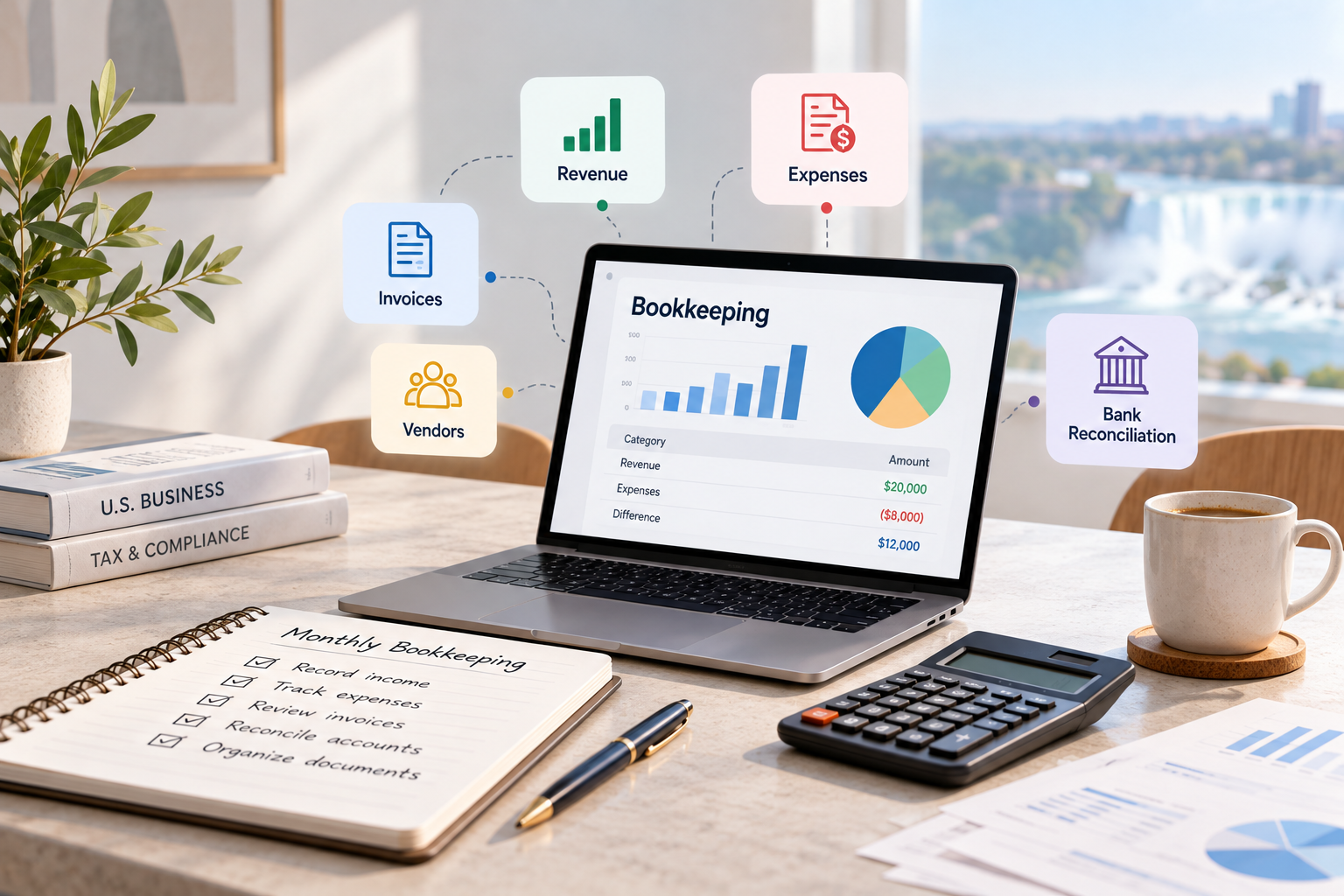
Accounting software
Tax and financial reporting
The objective is to create an organized financial workflow.
For example, instead of manually entering every contractor payment into your accounting system, you may use integrated tools that help connect payment information with your bookkeeping records. A more organized process can reduce repetitive work and improve visibility into financial activity. Your banking, payment, payroll, and bookkeeping systems should work together—not operate as disconnected tools.
5. Financial Visibility and Cash Management
One of the biggest challenges growing businesses face is understanding the difference between revenue and available cash.
A company may generate significant sales while still struggling to pay upcoming expenses.
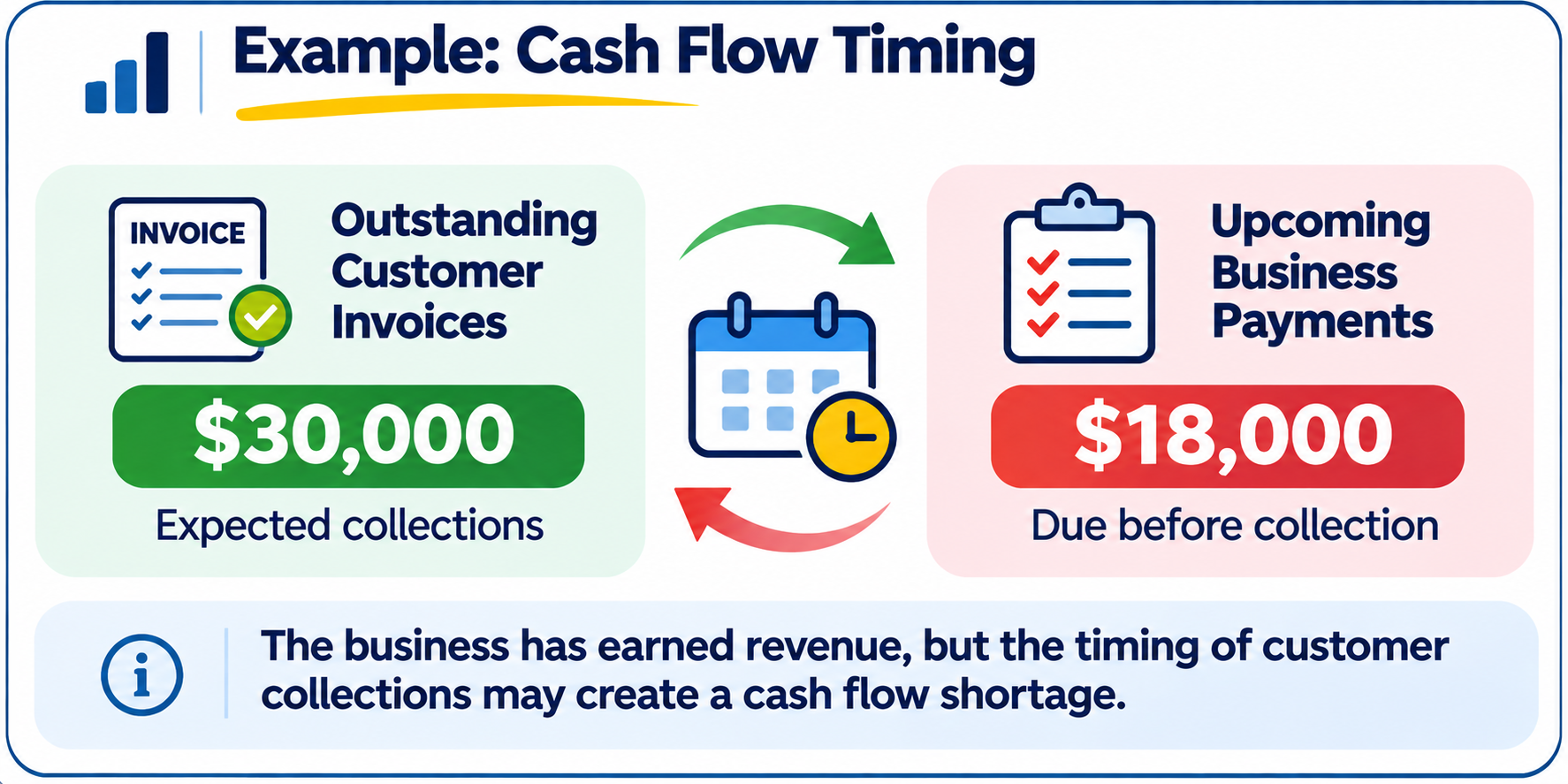
The business has earned revenue, but the timing of customer collections may create a cash flow shortage. Even though customers owe the business $30,000, that money may not yet be available to pay the $18,000 in upcoming obligations.
That's why growing companies need more than a bank balance. They should understand expected customer payments, upcoming bills, payroll obligations, operating expenses, outstanding invoices, and short-term cash requirements.
Revenue tells you what your business is generating. Cash flow helps you understand whether you can meet your obligations when they're due.
Fintech vs. Traditional Banking: Understanding the Difference
A fintech platform and a traditional bank are not automatically the same thing. Some fintech companies provide digital interfaces through which customers access financial services offered by partner institutions.
A bank may provide the underlying deposit account, while the fintech company provides the technology and user experience. Other arrangements may operate differently. Before relying on a financial platform for important business operations, understand who actually provides the service.
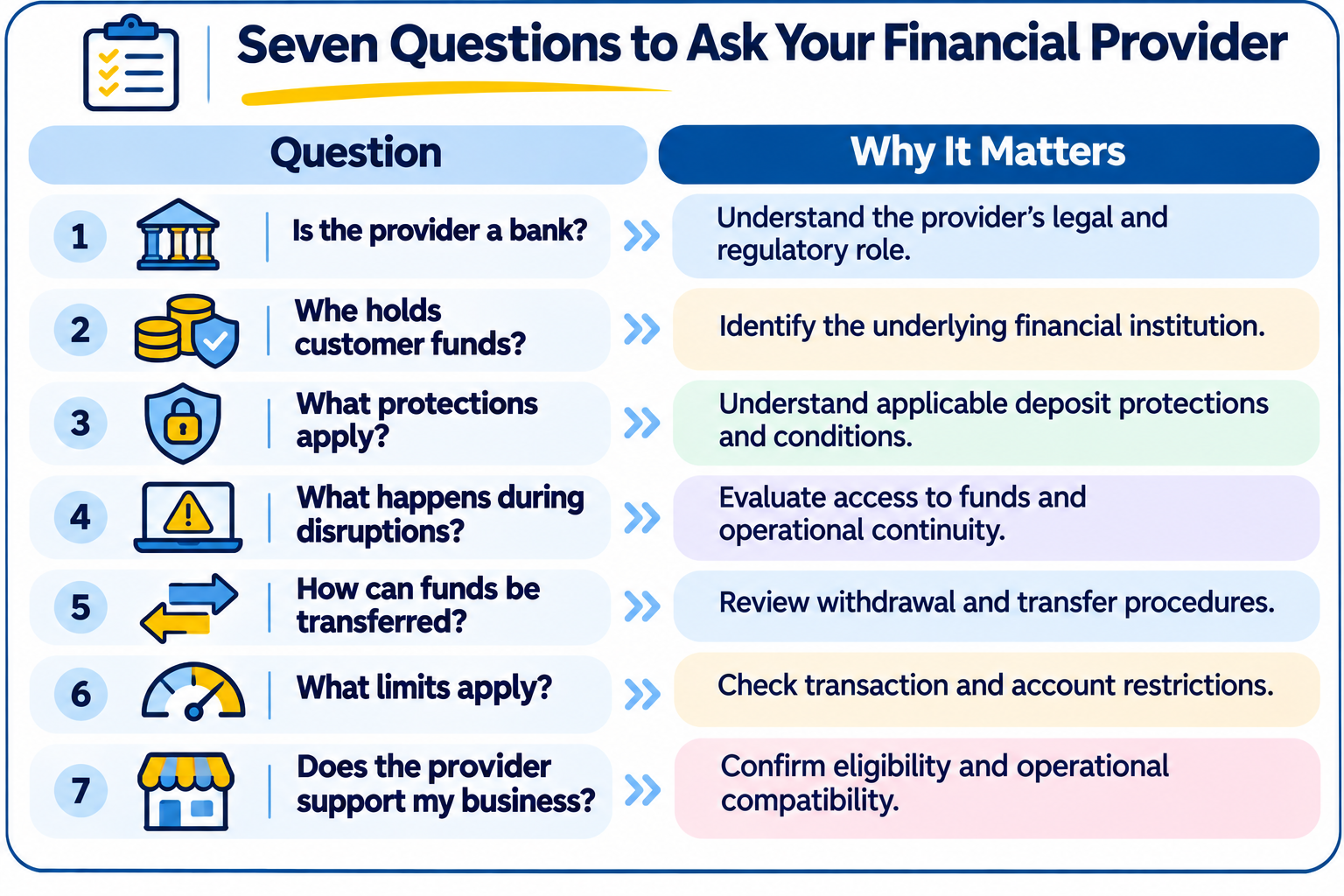
What About FDIC Insurance?
This is particularly important when using fintech platforms that advertise banking services.
The Federal Deposit Insurance Corporation (FDIC) generally insures eligible deposits held at FDIC-insured banks, subject to applicable limits and ownership categories.
However, a fintech platform's relationship with an FDIC-insured bank does not automatically mean every customer balance is protected in every circumstance. Pass-through deposit insurance depends on specific requirements being satisfied. It's also important to understand that deposit insurance does not necessarily protect against every operational disruption involving a fintech intermediary.
Before relying on a provider, understand where your money is held, who maintains the relevant account records, and what protections apply. For additional information, visit the FDIC Consumer Resource Center.
Build Your Financial Infrastructure Around Your Business Model
Not every U.S. business needs the same financial services. An international consultant may primarily need reliable payment collection, international transfers, and organized bookkeeping.
An e-commerce business may need merchant services, inventory-related financing, payment reconciliation, and cash management. A growing agency may need payroll, contractor payment workflows, expense controls, and financial reporting. The appropriate financial setup depends on how your business operates.
The Biggest Mistake: Adding More Apps Without a Financial Strategy
As a business grows, it's tempting to solve every new problem by subscribing to another financial platform. One app handles payments. Another manages expenses. A third handles contractor transfers. A fourth provides accounting reports. But more tools don't automatically mean better financial management.
Without a connected system, your business may experience scattered financial records, difficult reconciliations, overlapping fees, unclear cash positions, and limited visibility into overall performance. The better approach is to understand what each provider does and how the services work together.
A connected financial system is more valuable than a collection of disconnected financial tools.
Frequently Asked Questions
Do I need to stop using fintech platforms as my U.S. business grows?
No. Fintech platforms can remain valuable components of your financial infrastructure. The goal is to determine whether your current services meet your company's changing requirements.
Is a fintech platform the same as a bank?
Not necessarily. Some fintech platforms provide technology and financial interfaces while partnering with regulated banks for underlying services. The exact arrangement depends on the provider.
Can a nonresident entrepreneur open a traditional U.S. business bank account?
Possibly. Eligibility depends on the financial institution's requirements, including ownership, identification, business activities, and documentation.
Does having a U.S. LLC automatically qualify me for business financing?
No. Lenders evaluate eligibility based on their underwriting criteria and the business's circumstances. Forming a U.S. LLC alone does not guarantee financing.
Is money held through a fintech platform FDIC-insured?
It depends on the underlying banking arrangement and whether applicable insurance requirements are satisfied. A fintech platform's partnership with an FDIC-insured bank does not automatically guarantee coverage for every balance or circumstance.
What financial services should a growing e-commerce business consider?
Depending on its needs, an e-commerce business may benefit from merchant services, payment reconciliation, inventory-related financing, organized supplier payments, bookkeeping integrations, and cash flow management.
Why is cash flow management important if my business is profitable?
Because revenue and cash availability are different. A company may earn revenue but experience shortages when customer payments arrive after bills or other obligations become due.
Should I use multiple business bank accounts?
Multiple accounts may help organize financial operations, but they are not necessary for every company. The decision should reflect your business model, cash management requirements, and administrative needs.