Your U.S. business is growing. You're getting more customers, managing more projects, and handling more daily responsibilities. At some point, you realize something important:
You can't do everything yourself anymore.
Maybe you need someone to redesign your website, manage customer support, handle marketing, or help with everyday business operations. But before bringing someone onto your team, there's an important question:
Should you hire an employee or work with an independent contractor? At first, the answer may seem simple. Contractors offer flexibility, while employees provide ongoing support.
However, the difference goes beyond how someone gets paid. The working relationship you establish can affect your business costs, payroll responsibilities, taxes, reporting requirements, and legal obligations. Understanding that distinction is an important step toward building a sustainable U.S. business.
What Is the Difference Between an Employee and an Independent Contractor?
Both employees and independent contractors can contribute valuable skills to your business. The key difference is the nature of the working relationship.
What Is an Employee?
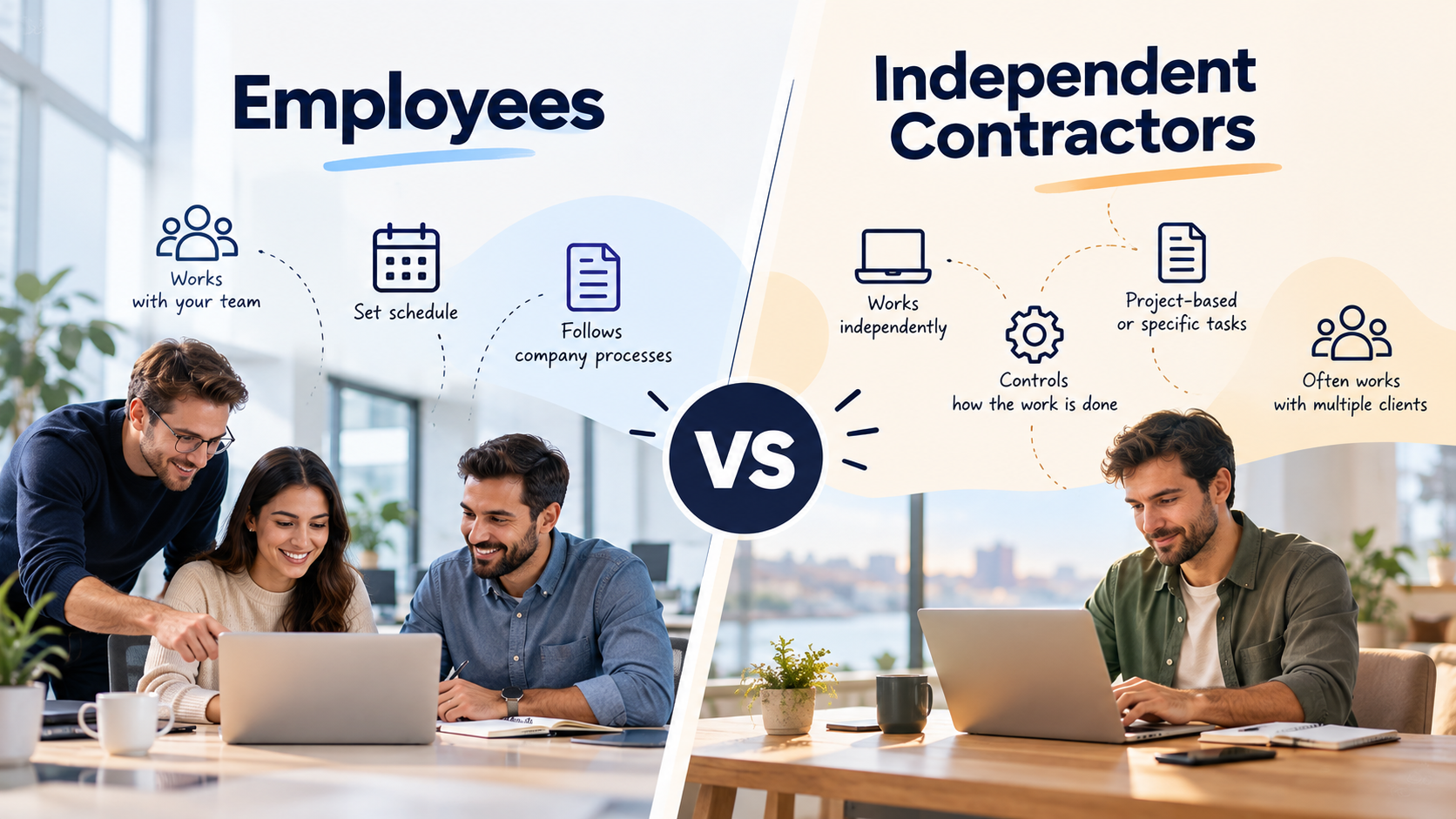
An employee generally works within a business under an employment relationship. The employer may control not only what work needs to be completed but also when, where, and how that work is performed.
For example, imagine you hire a customer support representative. The person works scheduled shifts, follows your company's procedures, uses your internal systems, and reports directly to a supervisor. These circumstances may indicate an employment relationship. Employees can provide ongoing operational support, but businesses must also consider applicable payroll, employment tax, and other employer responsibilities.
What Is an Independent Contractor?
An independent contractor generally operates an independent business or provides services independently to clients. The hiring company typically focuses on the results or deliverables rather than controlling every detail of how the work is completed. For example, you hire a freelance designer to redesign your website.
You agree on the project scope, deadline, deliverables, and payment. The designer determines how to complete the project and may work with other clients. These circumstances may indicate an independent contractor relationship. Contractors can be useful for specialized projects, temporary assignments, and flexible business support.
However, there's one important rule:
Calling someone an independent contractor doesn't automatically make them one. The actual working relationship matters.
Independent Contractor vs. Employee: Key Differences
Here's a simplified comparison of the two working relationships.
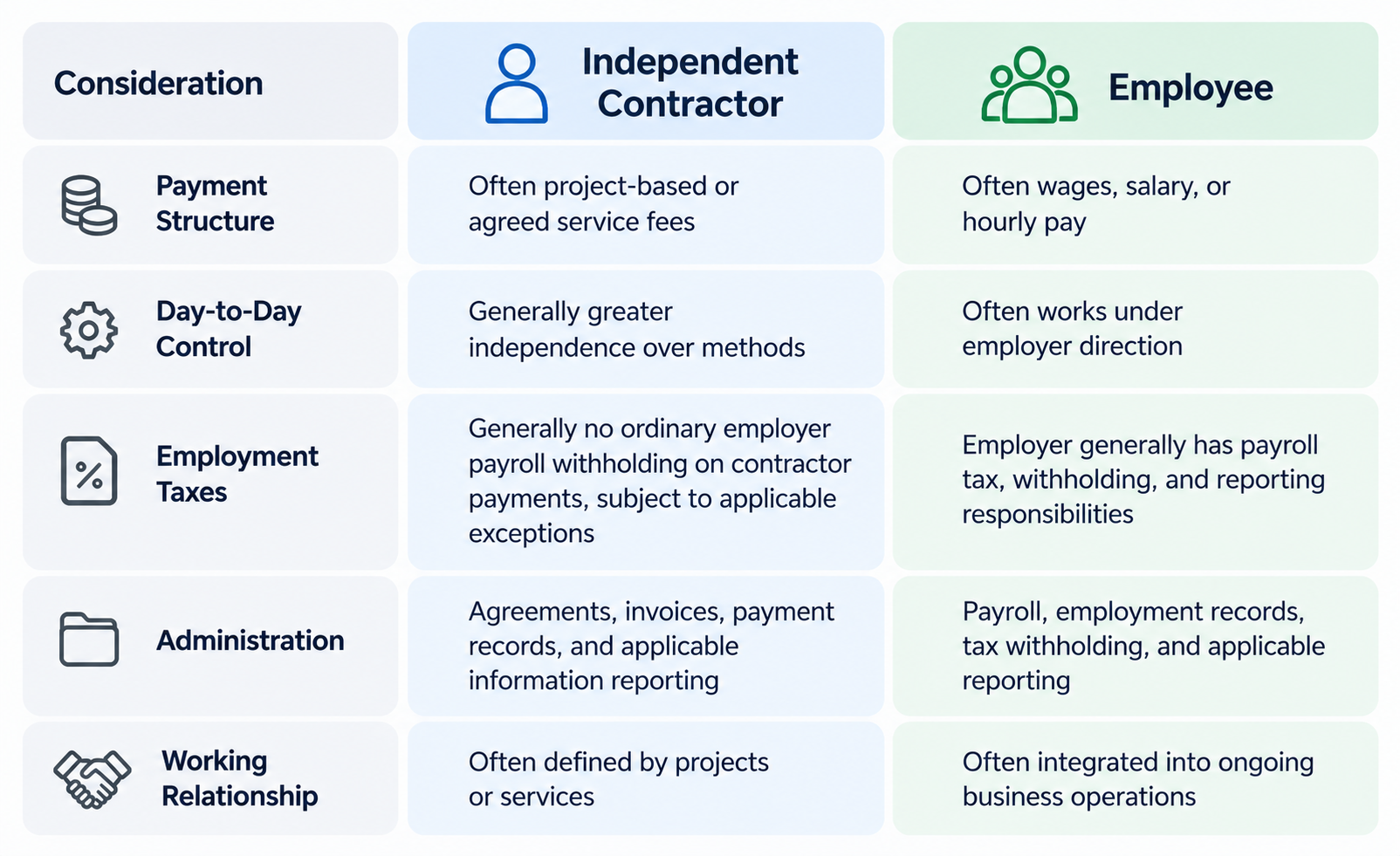
These are general differences rather than automatic classification rules. Actual requirements depend on the relationship and applicable federal, state, and local laws.
How Does the IRS Determine Worker Classification?
One of the most common misconceptions among new business owners is that signing a contractor agreement automatically establishes independent contractor status. That's not necessarily true.
For federal employment tax purposes, the IRS generally evaluates three categories of factors:
1. Behavioral Control
Who controls how the work is performed?
Consider whether your company determines the worker's schedule, provides detailed instructions, requires specific training, or closely supervises daily activities. Compare that with a situation where your company defines the expected result and deadline, while the worker independently determines how to complete the assignment. The nature and degree of control can help indicate the appropriate classification.
2. Financial Control
How independently does the worker operate?
For example, does the person operate an independent business, serve multiple clients, invest in equipment, manage business expenses, and have an opportunity to earn a profit or incur a loss? Or does the person function primarily as part of your company's regular operations?
These financial circumstances can help inform the classification analysis.
3. Relationship Between the Parties
What does the overall relationship look like? Is the work based on a defined project with specific deliverables? Or is the person expected to work indefinitely as part of your regular team, potentially receiving employee-type benefits and ongoing supervision?
Written agreements can help document the relationship, but they don't override the actual circumstances. No single factor automatically determines whether someone is an employee or an independent contractor. Other legal standards may also apply under federal labor laws and state laws.
A Practical Example: Growing an E-Commerce Business
Imagine Alex owns a growing U.S. e-commerce company. His business needs help with two different responsibilities.
Situation A: Website Redesign
Alex hires a freelance web designer to redesign his online store. They agree on a project fee, milestones, deliverables, and completion date. The designer manages the project independently and decides how to perform the work. A contractor arrangement may be appropriate, depending on the full circumstances.
Situation B: Daily Customer Support
Alex also needs someone to answer customer inquiries every weekday. The worker must follow company procedures, use assigned systems, attend regular meetings, and report to a supervisor.
These facts may point toward an employment relationship, depending on the full circumstances. Both workers support the same business. But their working relationships may be very different. The correct classification should reflect how the work actually happens—not simply which arrangement seems more convenient.
Understanding the Tax and Payroll Responsibilities
The difference between contractors and employees can affect how your business handles payments, taxes, and reporting.
Paying Independent Contractors
Independent contractors are often paid based on agreed fees, invoices, or project milestones. Depending on the circumstances, businesses may have information-reporting obligations.
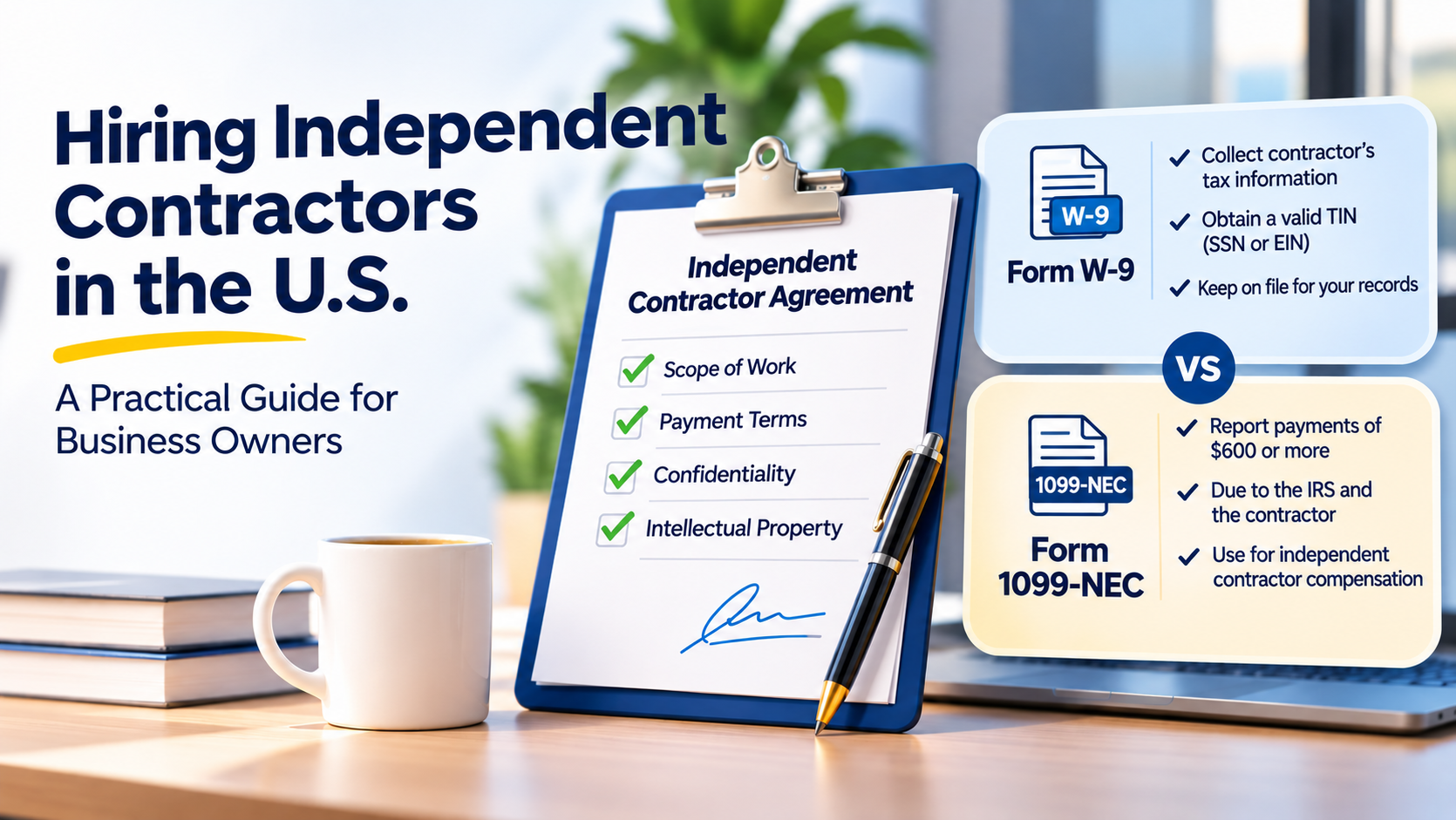
For example, Form 1099-NEC may be required for certain payments to independent contractors when applicable IRS reporting rules are met. Not every contractor payment requires the same form. The appropriate documentation and reporting depend on factors such as the worker's tax status, payment type, and applicable rules.
Paying Employees
Hiring employees generally introduces payroll-related responsibilities. Depending on the circumstances, employers may need to withhold applicable employment taxes, pay employer employment taxes, maintain payroll records, and complete required employment tax reporting.
Other federal, state, or local employment requirements may also apply. The important point is that the financial comparison involves more than the amount paid to the worker.
The total responsibility of a working relationship includes administration, taxes, reporting, and applicable legal requirements.
Is Hiring an Independent Contractor Always Cheaper?
Not necessarily. Many entrepreneurs consider contractors because they appear easier to engage and require less payroll administration. But cost shouldn't be the only factor.
Imagine a business owner wants someone to work fixed hours, follow detailed daily instructions, perform an ongoing internal role, and operate under close supervision. The owner signs a contractor agreement and pays the worker through monthly invoices.
Does that automatically establish independent contractor status?
No.
If the actual relationship meets the applicable legal standard for employment, the company may face additional taxes, reporting obligations, or other consequences from worker misclassification.
A lower apparent cost today doesn't necessarily mean a lower total cost tomorrow. The better decision is the one that fits the actual working relationship and applicable legal requirements.
Why Worker Misclassification Matters
Worker misclassification occurs when a worker is treated as an independent contractor even though the applicable legal standard requires employee treatment, or when another classification error occurs.
For business owners, incorrect classification can create compliance problems.
Depending on the circumstances, these may involve unpaid employment taxes, reporting corrections, penalties, or obligations under employment and labor laws.
This is why worker classification should be considered before the working relationship begins. A contract is important. Proper payment records are important. But neither replaces an accurate assessment of how the worker will actually operate.
The Biggest Hiring Mistake: Choosing Based Only on Convenience
One of the biggest mistakes growing businesses make is choosing worker status based on administrative convenience.
For example:
“I don't want to run payroll, so I'll just call everyone a contractor.”
Or:
“The person agreed to be a freelancer, so classification isn't an issue.”
These assumptions can create problems. The better approach is to evaluate the business's actual needs, the worker's independence, the degree of control, the expected duration of the relationship, and applicable legal requirements Hiring should begin with understanding the work—not choosing the easiest payment method.
Five Questions to Ask Before Hiring
Before bringing someone into your U.S. business, answer these five questions.
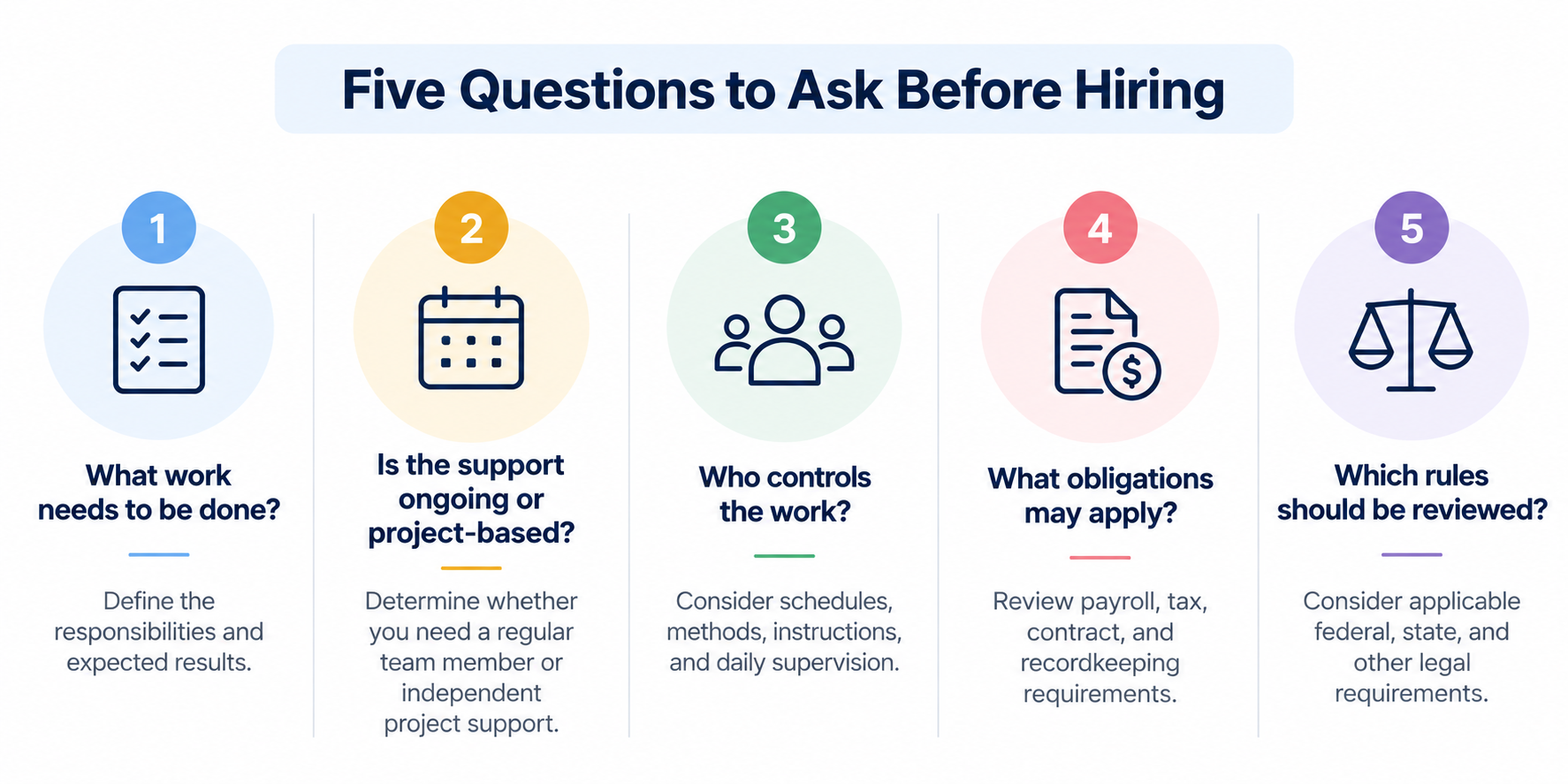
These questions won't automatically determine classification, but they can help you identify issues before entering into an arrangement. If the answers remain unclear, seek qualified professional guidance before finalizing the relationship.
Build Your Team with the Right Foundation
As your U.S. business grows, hiring the right people becomes increasingly important. But finding talented workers is only part of the process. You also need to understand how those individuals will work with your business and which responsibilities come with the relationship.
At InceptaBiz, we help international entrepreneurs navigate the operational and compliance considerations involved in establishing and managing U.S. businesses—from business formation and tax-related planning to ongoing compliance support.
Our goal is to help founders make informed decisions as their companies grow. Because building a strong team isn't simply about adding people. It's about creating working relationships that support your business today and remain sustainable as it grows.
Frequently Asked Questions
What is the main difference between an employee and an independent contractor?
The primary distinction involves the nature of the working relationship, including the business's control over the work, the worker's financial independence, and the overall relationship between the parties.
Can I classify someone as an independent contractor if we sign a contract?
Not automatically. A written agreement is useful, but worker classification depends on the actual circumstances and applicable legal standards.
Do independent contractors receive Form 1099-NEC?
Certain payments to independent contractors may require Form 1099-NEC when applicable IRS reporting rules are met. The correct reporting depends on the payment and the worker's circumstances.
Do I need to run payroll for employees?
Employers generally have payroll-related responsibilities, including applicable tax withholding, employment tax payments, recordkeeping, and reporting.
Can a contractor work for my business every month?
Yes, a recurring arrangement is possible. However, its frequency is only one consideration. Classification depends on the overall relationship and applicable legal standards.
Is an independent contractor always less expensive than an employee?
No. The total cost depends on service fees, payroll and administrative responsibilities, the nature of the work, and applicable legal requirements.
Can my U.S. LLC hire employees or contractors?
Generally, yes. However, the applicable requirements depend on the business, worker, location, and circumstances.