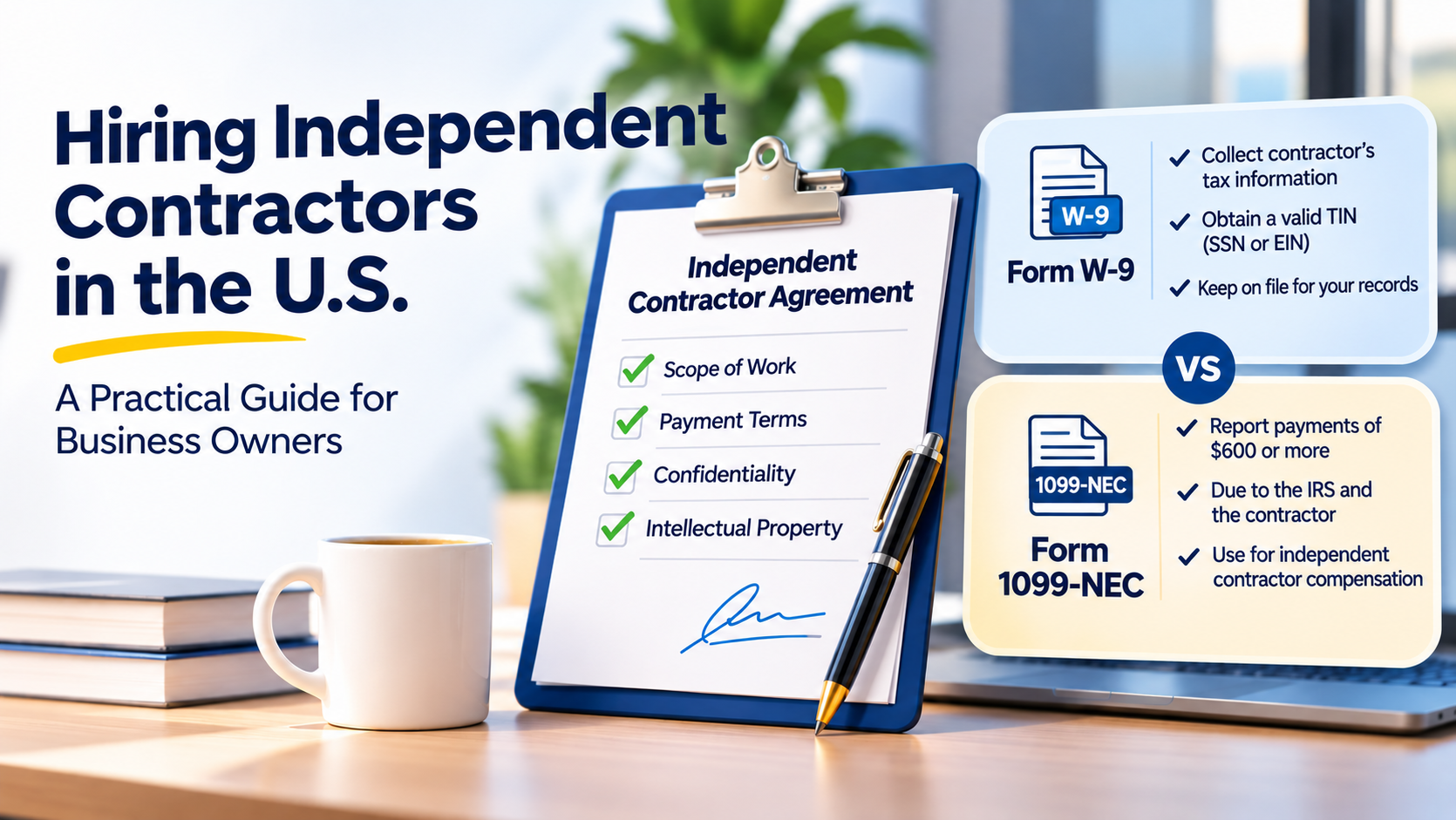
Your U.S. business is growing. You need a website developer, a marketing specialist, a virtual assistant, or someone to help with a specific project. You've decided that working with an independent contractor may be the right approach.
But what happens next?
Do you need a written agreement?
Should you collect tax information before paying?
What if the contractor lives outside the United States?
And how should you document the payments?
Hiring a contractor isn't simply about finding someone with the right skills and agreeing on a price. It's about establishing a professional working relationship from the beginning. For international entrepreneurs operating U.S. companies, understanding these steps can help prevent administrative problems and support proper tax compliance. Here's what every business owner should consider before making the first contractor payment.
1. Start with a Clear Scope of Work
Before discussing payment, define exactly what the contractor will deliver. A clear scope of work helps both parties understand the expectations and reduces the possibility of disagreements later.
Your scope should address:
Services: What work will the contractor perform?
Deliverables: What specific results should be provided?
Timeline: When will the project begin and end?
Milestones: Are there intermediate deadlines?
Responsibilities: What information or resources will your company provide?
Payment Terms: How much will the contractor receive, and when?
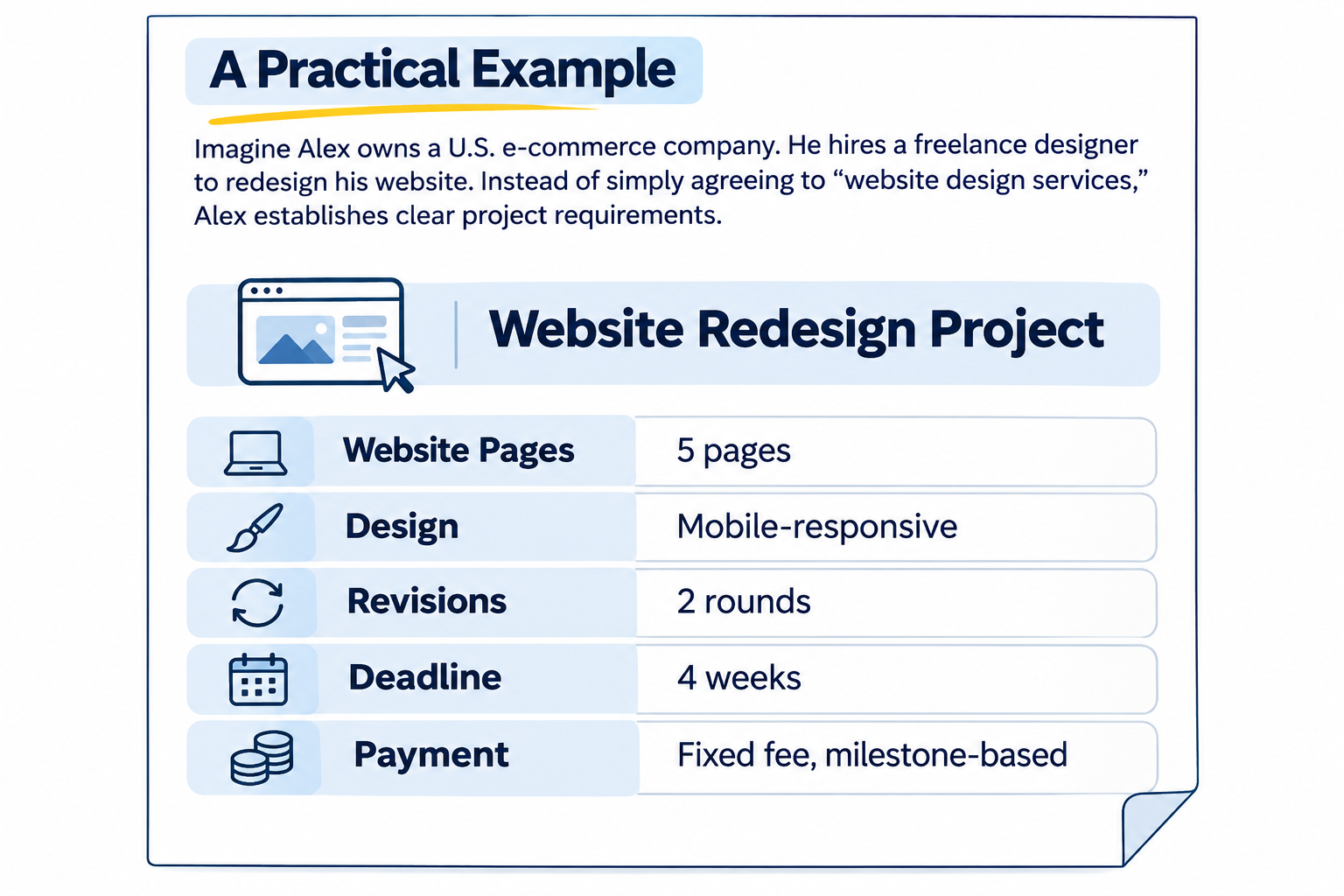
Now both parties understand what is included in the project. Clear expectations before the project begins can prevent confusion after the work is delivered.
2. Put the Contractor Agreement in Writing
A written independent contractor agreement helps document the relationship and clarify each party's responsibilities. Even when the project seems straightforward, important details should be addressed before work begins.
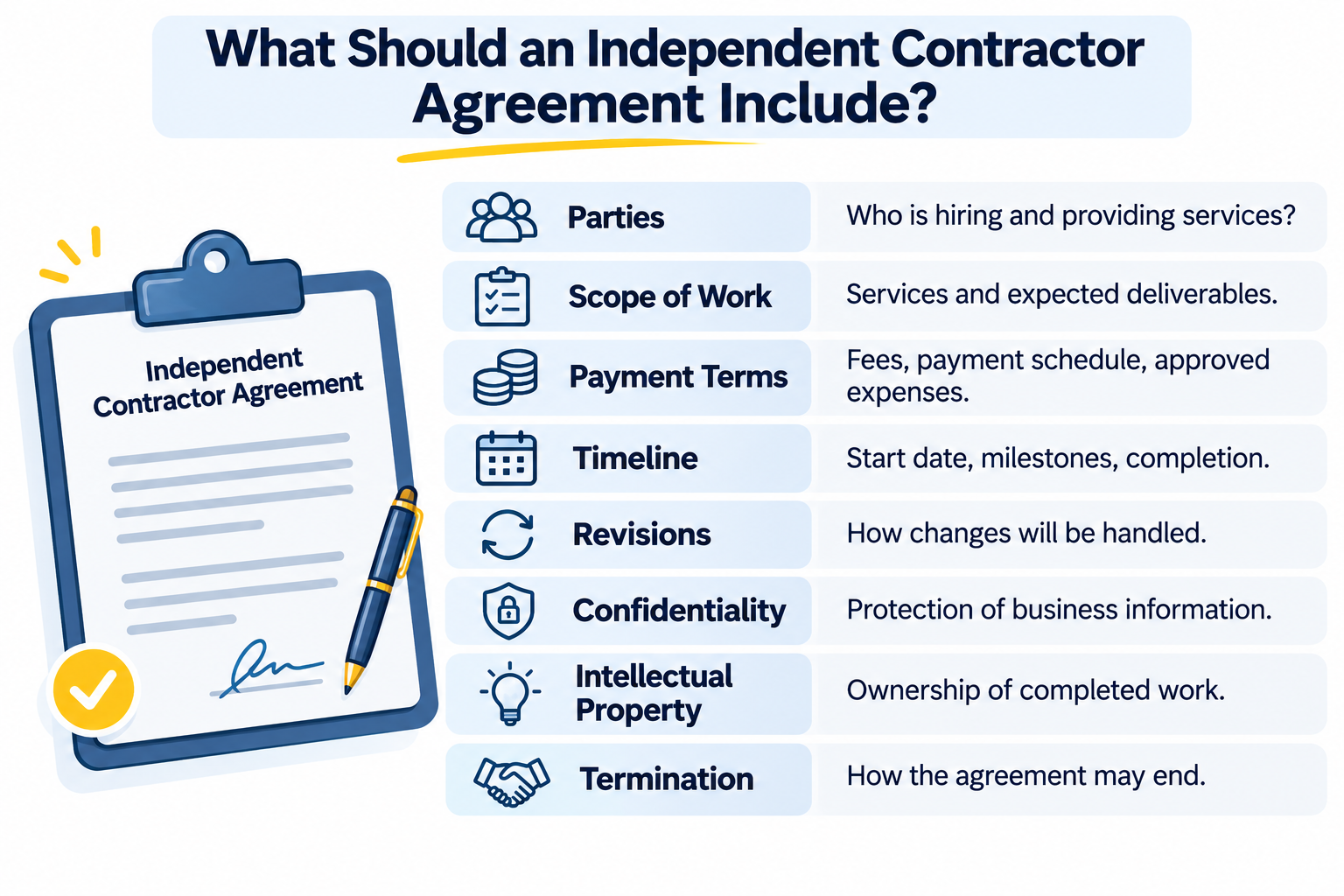
One particularly important issue is intellectual property ownership. Imagine a contractor develops your company's logo, website, marketing materials, or software.
You might assume that paying for the work automatically gives your business full ownership. But that isn't always the case. Your agreement should clearly address ownership, licensing, and any necessary transfer of intellectual property rights.
Also remember that a signed contractor agreement doesn't automatically establish independent contractor status. The actual working relationship must satisfy applicable legal standards.
3. Collect the Right Tax Documentation
Before making contractor payments, determine which tax documentation your business needs. The appropriate forms depend on factors such as the contractor's tax status, location, and the nature of the services.
What Is Form W-9?
Form W-9 — Request for Taxpayer Identification Number and Certification is commonly used to collect taxpayer information from U.S. persons. It generally provides information such as the contractor's legal name and taxpayer identification number.
Depending on the taxpayer, the identification number may be an SSN, EIN, or ITIN. Your company generally keeps the completed W-9 in its records rather than submitting the form directly to the IRS. The information may be needed for applicable tax reporting.
What Is Form 1099-NEC?
Form 1099-NEC is generally used to report qualifying nonemployee compensation paid in the course of a trade or business. For the 2026 tax year, the general reporting threshold for qualifying nonemployee compensation is $2,000.
However, the reporting requirement depends on the payment, recipient, and applicable exceptions. For example, certain payments to corporations are generally treated differently, subject to exceptions. Not every contractor payment automatically requires Form 1099-NEC.
The key is to determine the applicable reporting requirement before tax season—not after the payments have already been made.
4. What If Your Contractor Lives Outside the United States?
This is particularly important for international business owners. Imagine your U.S. company hires:
A graphic designer in Turkey
A software developer in India
A marketing consultant in Canada
Should you automatically collect Form W-9 and issue Form 1099-NEC to everyone? Not necessarily. Foreign contractors may be subject to different documentation, sourcing, withholding, and reporting rules.
Where Are the Services Performed?
For U.S. federal income tax purposes, the location where personal services are physically performed generally determines the source of the service income.
Consider these situations:
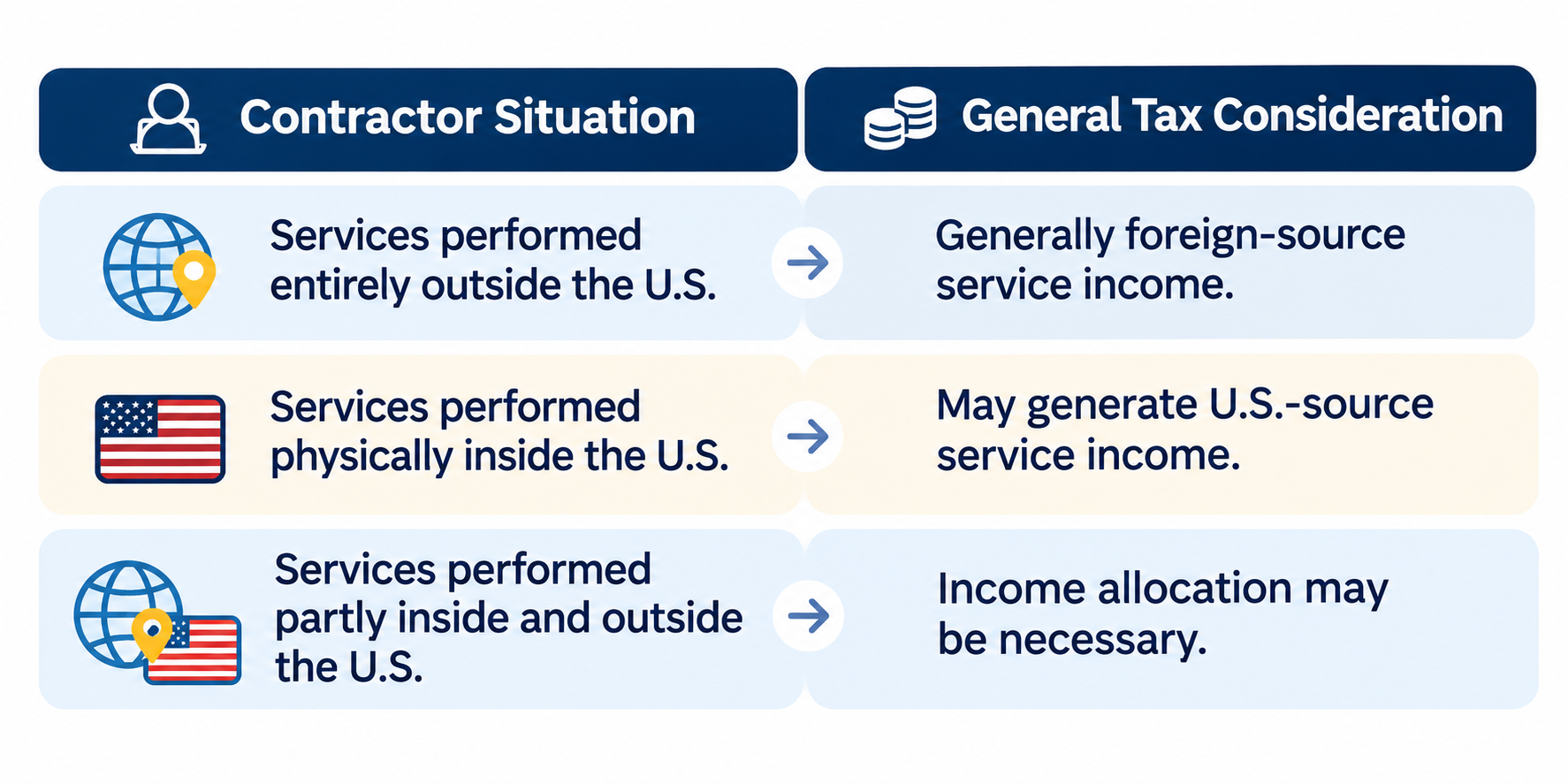
Depending on the contractor's status and the nature of the payment, documentation may include Form W-8BEN for foreign individuals or Form W-8BEN-E for foreign entities.
Compensation for personal services performed physically in the United States can involve different documentation and withholding rules, including Form 8233 in certain treaty situations.
The important lesson:
A contractor's country of residence alone doesn't determine the U.S. tax treatment. Where the services are actually performed matters.
5. Establish a Professional Payment Process
Once the agreement and tax documentation are in place, establish a reliable payment process.
Your business should always be able to answer three questions:
What service did the contractor provide?
How much did the company pay?
Where is the supporting documentation?
For example, Alex pays a contractor $2,500 for website development. He should maintain the signed agreement, invoice, evidence of completed work, payment confirmation, applicable tax documentation, and relevant correspondence.
A professional contractor invoice should clearly identify the service provided, invoice amount, invoice date, payment terms, and payment instructions.
Whenever possible, make business payments through your company's business bank account and record them in your bookkeeping system.
This creates a clear financial trail and helps with financial reporting and tax preparation. Remember that paying an invoice doesn't automatically make the entire payment tax-deductible. The expense must meet the applicable tax rules.
6. Protect Your Business Information
Contractors may need access to important business resources. These might include customer databases, financial information, marketing accounts, software platforms, and internal documents.
Before granting access, establish appropriate safeguards. A practical approach includes providing only necessary permissions, using individual accounts instead of sharing passwords, establishing confidentiality expectations, and removing access when the engagement ends.
You should also clarify what happens to company documents, files, and other materials after the project is completed. A professional contractor relationship should protect your business information as well as your contractual rights.
7. Make Sure the Actual Relationship Matches the Agreement
One of the most important things to understand is that a contractor agreement doesn't override worker classification rules.
Imagine your company signs an independent contractor agreement with someone.
However, the person works a fixed daily schedule, receives detailed instructions, operates under ongoing supervision, and functions as part of your regular workforce.
These circumstances may raise worker classification questions. For federal employment tax purposes, the IRS generally evaluates behavioral control, financial control, and the relationship between the parties.
Other federal labor laws and state laws may apply different standards.
The practical lesson is simple: Document the relationship accurately—and make sure the way you actually work together reflects its genuine nature.
The Biggest Mistake: Starting Work Before Organizing the Details
Many entrepreneurs find a talented contractor, agree on a price through a few messages, and immediately begin the project. Everything seems fine until questions arise.
Who owns the completed work? What was included in the original price? Were revisions covered? Was the payment properly documented? Was the correct tax information collected?
Trying to resolve these questions months later can create unnecessary problems. A little preparation before the first payment can save considerable time later.
Jimmy's Insight
“A good contractor relationship doesn't begin with the first invoice. It begins with clear expectations, proper documentation, and an understanding of each party's responsibilities. When you organize these details from the start, you create a stronger foundation for your business.”
— Jimmy Flores, Senior Tax & Business Strategist
Your Contractor Hiring Checklist
Before making your first contractor payment, review the following checklist.
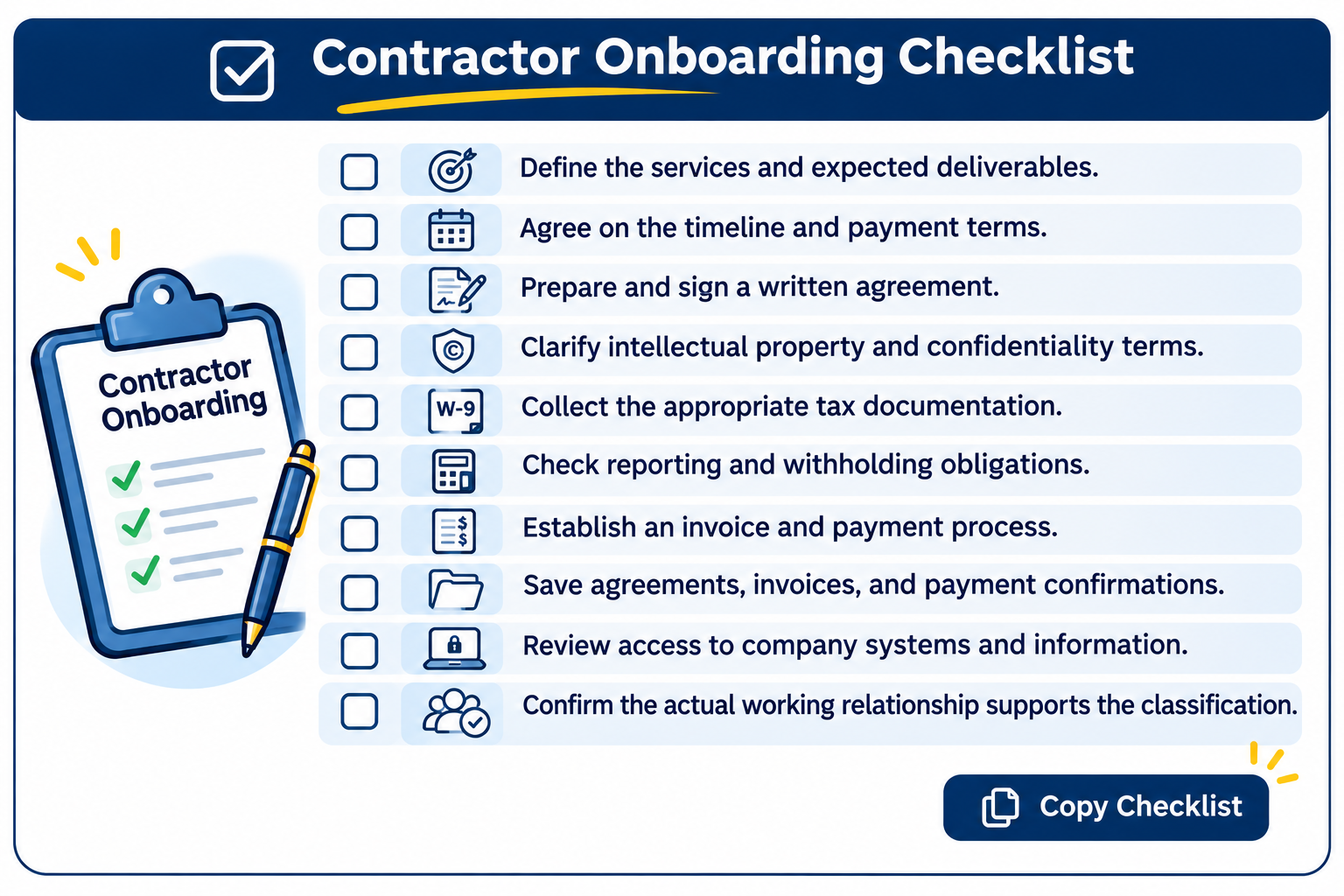
This checklist won't replace individualized legal or tax guidance, but it can help establish a more organized onboarding process.
Build Contractor Relationships That Support Your Business Growth
Independent contractors can help your business access specialized skills, manage projects, and expand its capabilities without necessarily building a permanent internal team.
But a successful contractor relationship involves more than agreeing on a fee.
It requires clear expectations, written agreements, appropriate documentation, reliable payment records, and an understanding of applicable compliance responsibilities.
At InceptaBiz, we help international entrepreneurs navigate the practical and tax-related considerations of establishing and operating U.S. businesses, including business administration, financial organization, and ongoing compliance planning.
Our goal is to help founders build professional business processes that support sustainable growth. Because hiring the right contractor is important. Building the right working relationship is just as important.
Frequently Asked Questions
Do I need a written agreement to hire an independent contractor?
A written agreement is strongly recommended. It helps clarify services, deliverables, payment terms, confidentiality, intellectual property, and other important conditions.
What tax form should I collect from a U.S. contractor?
Form W-9 is commonly used to collect taxpayer information from U.S. persons, including many independent contractors.
When is Form 1099-NEC required?
For the 2026 tax year, qualifying nonemployee compensation generally becomes reportable at $2,000, subject to the applicable reporting rules and exceptions.
Can my U.S. LLC hire contractors outside the United States?
Generally, yes. However, documentation, withholding, reporting, and other legal requirements depend on the contractor's circumstances, the location of the services, and applicable laws.
Do foreign contractors always need Form W-8BEN?
No. The appropriate documentation depends on whether the contractor is an individual or entity, where the services are performed, and the nature of the payment. Different forms or rules may apply.
Who owns the work created by an independent contractor?
Ownership depends on the applicable law and contractual arrangements. Businesses should address intellectual property rights clearly in the agreement rather than assuming payment automatically transfers ownership.
Does signing a contractor agreement prevent worker misclassification?
No. Worker classification depends on the actual working relationship and applicable legal standards, not simply the agreement's title.
What records should I keep for contractor payments?
Maintain relevant agreements, invoices, payment confirmations, evidence of completed work, applicable tax documentation, and related correspondence.