You have a customer. You've completed the work. Now the customer says:
“Please send us an invoice.”
It sounds simple—until the questions begin. What should the invoice include?
Should you use your company name or personal name?
Do you need an invoice number?
When should the customer pay?
Should you include payment instructions?
What makes an invoice actually look professional?
For a growing business, an invoice is much more than a document asking for money.
It's part of your sales process, your customer experience, and your financial records.
An Invoice Is More Than a Bill
Imagine two consultants complete exactly the same $2,500 project.
The first sends an email:
“Hi, please send $2,500 for the project.”
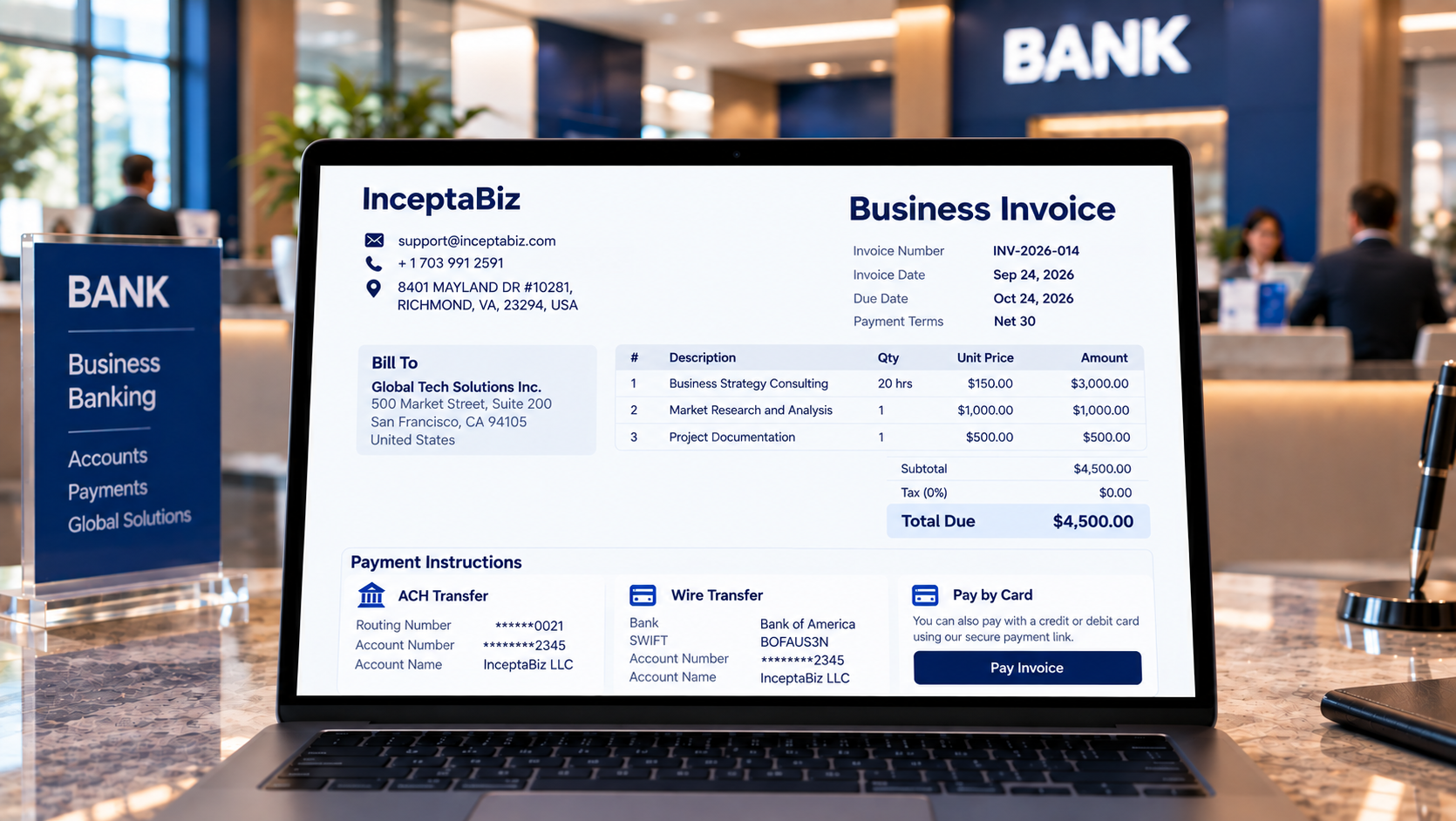
The second sends a professional invoice showing the business name, customer information, invoice number, invoice date, services provided, amount due, payment terms, and payment instructions.
They're asking for exactly the same amount. But the second business communicates something different:
“I have a professional process for doing business.”
A good invoice should make four things immediately clear:
What am I paying for?
How much do I owe?
When is it due?
How do I pay?
It also creates an important record of the underlying business transaction.
What Should a Professional Invoice Include?
There isn't one universal invoice design that every business must use. But a professional invoice should clearly identify the parties, transaction, amount due, and payment expectations. A simple way to approach it is to make sure your invoice answers seven questions.
1. Who is sending the invoice?
Include your business name and relevant contact information.
2. Who is being billed?
Clearly identify your customer or client.
3. Which invoice is this?
Give every invoice a unique invoice number.
4. When was it issued?
Include the invoice date.
5. What is the customer paying for?
Clearly describe the product or service provided.
6. How much is due?
Show the charges and total amount due clearly.
7. When and how should the customer pay?
Include your payment terms and payment instructions.
The goal is simple:
Your customer shouldn't have to email you to understand your invoice.
Invoice Numbering Matters
Invoice numbers may seem like a small administrative detail. But as your business grows, they become increasingly important.
Imagine issuing:
INV-001
INV-002
INV-003
Now imagine managing 2,000 transactions. A consistent numbering system makes it easier to organize invoices, track payments, handle follow-ups, process corrections, and maintain bookkeeping records.
You might use:
INV-001
or
2026-001
The exact format matters less than one principle:
Be consistent.
Describe What You're Charging For
Another common mistake is using descriptions that are too vague. For example:
Consulting — $3,000
That doesn't tell the customer very much. Compare it with:
Monthly Business Strategy Consulting — September 2026
or:
Website Development — Phase 2: Payment Integration
Now the transaction is much easier to understand. Clear descriptions also make your own financial records easier to interpret later. An invoice should explain the transaction—not just the price.
Set Clear Payment Terms
Sending an invoice without explaining when payment is expected can create unnecessary confusion. Common terms may include:
Due upon receipt
Net 15
Net 30
Net 45
For example, Net 30 generally communicates that payment is due within 30 days under the agreed terms. The important point isn't whether you choose Net 15 or Net 30. It's that your customer clearly understands when payment is expected.
Payment terms should also reflect what you agreed with the customer before or during the sale—not introduce an unexpected policy after the work has already been completed.
Tell Your Customer How to Pay
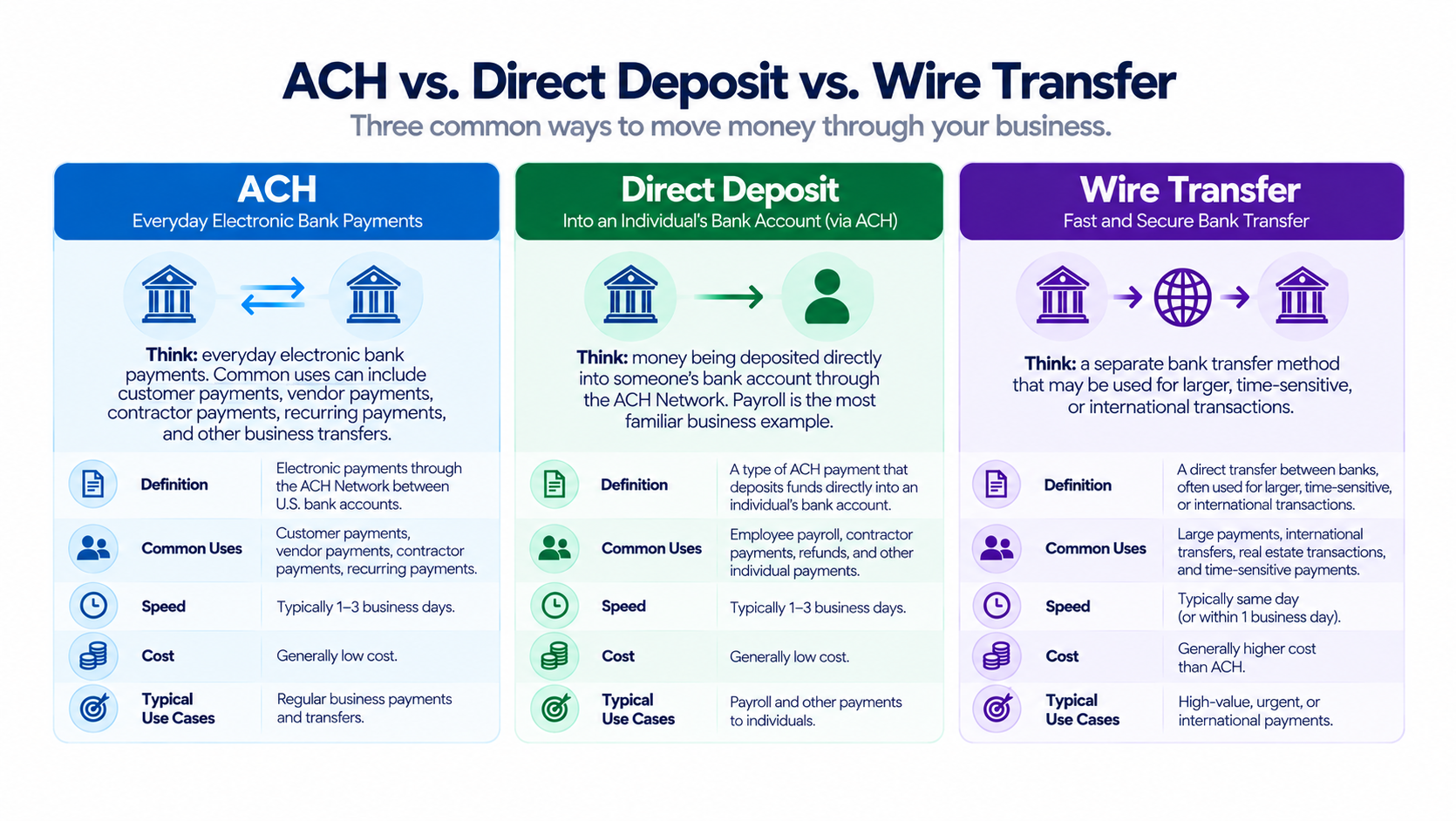
We previously discussed:
ACH • Direct Deposit • Wire Transfer
Now the question becomes:
How does your customer know which method to use?
Depending on your business, an invoice may provide options such as:
ACH payment instructions
Wire instructions
Credit or debit card payment
Payment platform link
Other approved payment methods
A consulting business may accept ACH or cards. An international business transaction may involve a wire. An e-commerce business may rely on an online checkout system. There isn't one payment method that works for every business. The goal is to make the payment process clear, secure, and easy to follow.
Be Careful With Payment Instructions
If you're including bank payment instructions, accuracy and security matter. Suppose a customer receives an email saying:
“We've changed our bank account. Please send the next payment to this new account.”
Unexpected changes to payment instructions shouldn't simply be trusted. They should be verified through a trusted communication channel. A professional invoicing system should help protect the business not only from late payments, but also from payment errors and fraud.
Invoicing and Bookkeeping Should Work Together
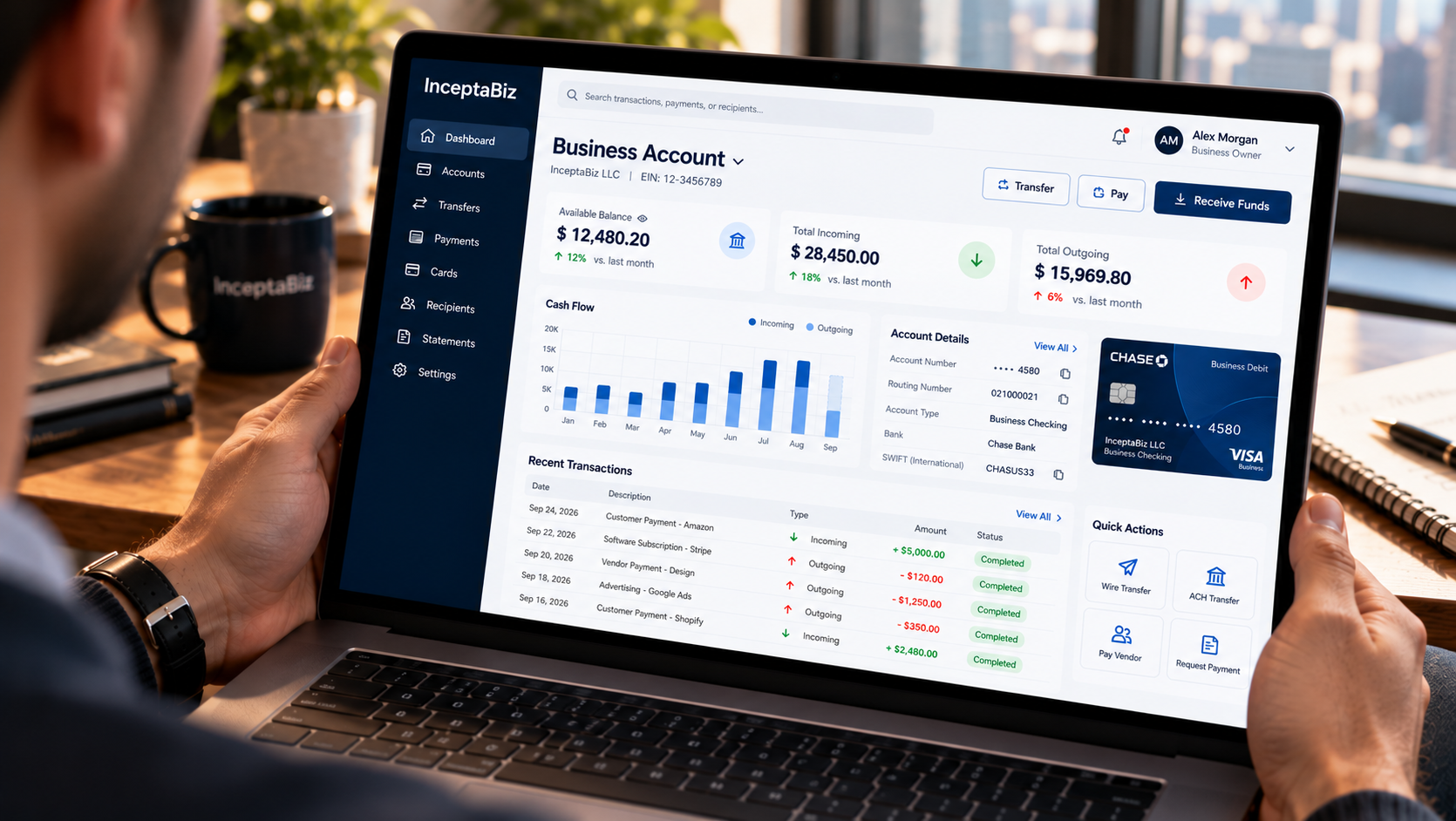
An invoice doesn't disappear once the customer pays it. It becomes part of your financial records. If your company sends 100 invoices during the year, you should be able to determine:
Which invoices were paid?
Which are still outstanding?
How much revenue was generated?
Which customers paid?
When did they pay?
Which invoices are overdue?
That's where invoicing and bookkeeping connect. A good invoicing system makes bookkeeping easier. A poor invoicing system creates confusion. A professional workflow might look like this:
Sale → Invoice → Payment → Bank Account → Bookkeeping
Each step should connect to the next.
Invoice vs. Receipt: What's the Difference?
These two documents are sometimes confused. An invoice is generally a request for payment. A receipt generally confirms that payment has been received. For example, imagine you complete a $2,000 consulting project.
You issue:
Invoice #105 — $2,000 — Due September 30
The customer then pays. You now have evidence of that payment and can maintain the appropriate financial records. The invoice and evidence of payment are related, but they serve different purposes.
A Real-World Example
Imagine Alex owns a U.S. consulting company. He completes a project for a corporate customer for:
$5,000
Alex creates:
Invoice #2026-014
The invoice includes his company name, customer name, invoice date, description of the consulting project, $5,000 project fee, total amount due, payment terms, and payment instructions.
Now the customer knows exactly:
What they're paying for.
How much they owe.
When payment is due.
How to pay.
When the $5,000 arrives in the business bank account, Alex can match that transaction to Invoice #2026-014 in his bookkeeping system. That's what a connected financial workflow looks like.
Don't Send Invoices Without a System
Manually creating a random invoice every time someone asks for one may work when you have three customers.
It becomes much harder when you have hundreds.
Without a consistent process, businesses can run into problems such as duplicate invoice numbers, missing invoices, unclear payment status, late follow-ups, incorrect customer information, difficulty matching payments, and disorganized bookkeeping.
The solution doesn't necessarily need to be complicated.
A simple, consistent invoicing process can make a major difference.
Five Things to Check Before Sending an Invoice
Before sending your next invoice, check:
1. Is the customer information correct?
2. Does the invoice have a unique invoice number?
3. Is the product or service clearly described?
4. Are the total amount and payment terms clear?
5. Can the customer easily understand how to pay?
If the answer is yes to all five, you're already building a much stronger invoicing process.
Build an Invoicing System, Not Just an Invoice
Creating a PDF invoice is easy. Building a process that continues working as your business grows is more important. Your invoices should eventually connect to your:
Payments → Business Bank Account → Bookkeeping → Financial Reporting → Tax Compliance
At InceptaBiz, we help international entrepreneurs build the systems behind their U.S. businesses—from company formation and business banking to payment processes, bookkeeping, tax compliance, and ongoing business support. Because getting paid isn't the end of the process.
It's part of a much larger financial system.
Frequently Asked Questions
What information should a business invoice include?
A professional invoice will typically identify the business sending it, the customer being billed, a unique invoice number, invoice date, description of the products or services, amount due, payment terms, and payment instructions.
Do I need an invoice number?
A consistent invoice-numbering system can make tracking payments, bookkeeping, follow-ups, corrections, and financial records much easier. The exact format can vary, but consistency is important. Episode
What does Net 30 mean on an invoice?
Net 30 generally indicates that payment is expected within 30 days under the agreed payment terms. Businesses may also use terms such as Net 15, Net 45, or Due upon Receipt.
Can I include ACH or Wire instructions on my invoice?
Depending on your payment setup, an invoice may provide ACH instructions, wire instructions, card-payment options, payment links, or other approved payment methods. The process should be clear and secure.
What is the difference between an invoice and a receipt?
An invoice generally requests payment, while a receipt generally confirms that payment has been received.
Why should invoices connect to bookkeeping?
Invoices help track revenue, customer payments, outstanding balances, overdue invoices, and transaction history. Connecting invoices with payments and bookkeeping creates a cleaner financial record for the business.